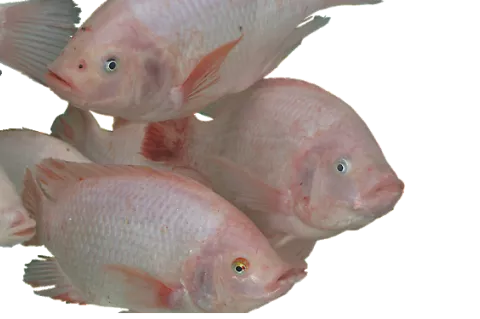
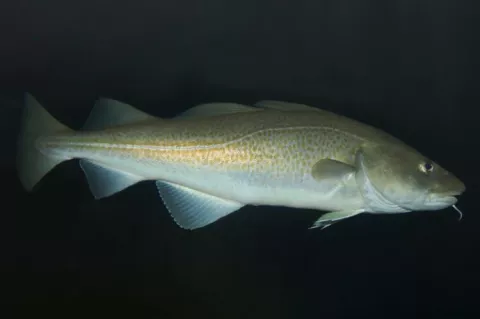
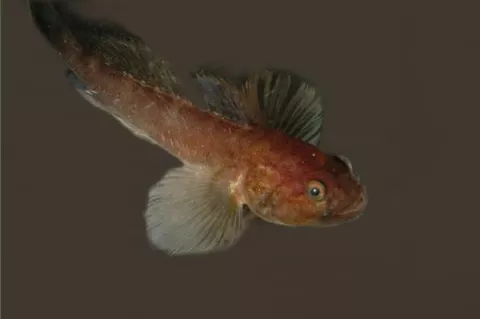
This is the findings of a new study in Global Change Biology by the University of British Columbia. The reason for this future decline in size stems from the fact that fish are cold-blooded animals, and are thus unable to regulate their body temperatures.
“When their waters get warmer, their metabolism accelerates and they need more oxygen to sustain their body functions,” said co-author William Cheung, associate professor at the Institute for the Ocean and Fisheries and director of science for the Nippon Foundation-UBC Nereus Program.
Researchers at the University of British Columbia (UBC) discovered that some fish have learnt to stay within marine reserves where they are safe from fishing, demonstrating the importance of such facilities. They made the discovery after modelling the movements of skipjack and bluefin tuna and great white sharks in the ocean.
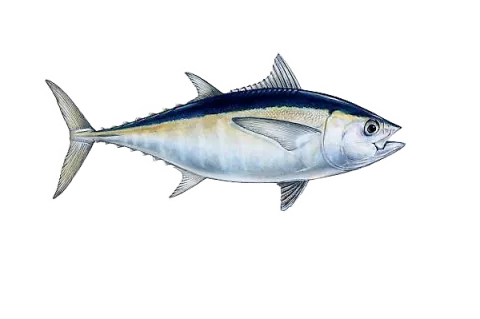
The Atlantic bluefin tuna is one of the largest and fastest fish in the ocean. They are incredible swimmers. With bodies shaped like torpedoes, they are practically built for speed. Some species of tuna can swim as fast as 69kph (43mph). They are exceptional predators from the moment they are born, and they can live up to 40 years.
The Atlantic bluefin tuna (Thunnus thynnus) belongs to the Scombridae family. They are magnificent and impressive wild animals. They live in both the western and eastern sides of the Atlantic Ocean, and during springtime, migrate to the Mediterranean Sea to spawn. They were once present in the Black Sea as well, but not anymore.
It is a situation many underwater photographers have experienced, even though they don't talk about it. And the resulting photos certainly don't make it onto Flickr or Facebook.
A camera-toting diver sees an interesting and beautiful fish, maybe a large grouper or a gaudily-colored tropical sweetlip. The diver then swims closer to the animal, in an effort to capture it in a frame-filling image. The fish tolerates the approach at first, but then gets nervous and panics. It turns around in an instant, to initiate a rapid escape.
Researchers from the Smithsonian’s Deep Reef Observation Project (DROP) have discovered a new scorpionfish species off the Caribbean island of Curaçao. Inhabiting depths between 95 m and 160 metres, it is the deepest-living member of its genus found in the western Atlantic Ocean. “The 50-300 m tropical ocean zone is poorly studied -- too deep for conventional SCUBA and too shallow to be of much interest to really deep-diving submersibles,” said DROP lead scientist Dr. Carole C. Baldwin.
It was early morning and our dive team was in the process of loading our gear into the car when my friendly neighbour, Walter, greeted me, asking where we were heading so early.
As I tell him what we were up to, he grinned, looking somewhat incredulous and wished me a good day. Yes, indeed, the hopes of finding a seahorse in Italy are very slim since they have become very rare. Seahorses are endangered, and in ten years, there may not be any left in the Mediterranean.
A new study has revealed butterflyfish are particularly fussy about their food and shelter needs, avoiding corals that have come in contact with seaweed. Conducted by the University of Delaware, the study is the first to critically evaluate how coral-seaweed interactions will impact coral associated reef fishes, a key component of coral reef resilience.
For the first time, Canadian researchers have tracked an adult female eel from Nova Scotia to the northern edge of the Sargasso Sea with a satellite tracker, a 45-day journey of 2,400 kilometres. For a century, scientists have been baffled as to how baby eels appear in the Sargasso Sea near Bermuda when adults have only been found in faraway places like Canada's St. Lawrence River.
Haemoglobin (Hb) is one of the most well-studied proteins to date and is key to blood oxygen (O2) transport in nearly all vertebrates and some invertebrates, as it increases the total O2 that can be transported in the blood and optimizes tissue O2 delivery.
Adding to the list of deep-sea creatures, a Nova Southeastern University's (NSU) Halmos College of Natural Sciences and Oceanography researcher recently found a never-before seen species from the deep waters of the northern Gulf of Mexico.
The three females specimens found ranged in size from 30-95 mm in length. Looking at a photo of the fish, one quickly understands how anglerfishes get their common name.