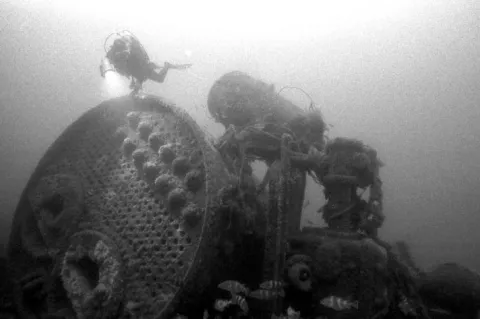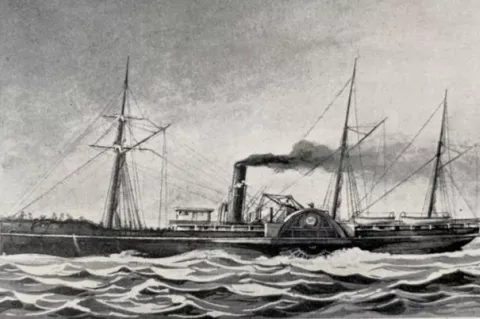
Technical divers have confirmed the identity of the 19th-century steamship City of Hobart, which sank in 1875 off the coast of Victoria, Australia. The wreck was located using seabed survey data from an offshore wind project.
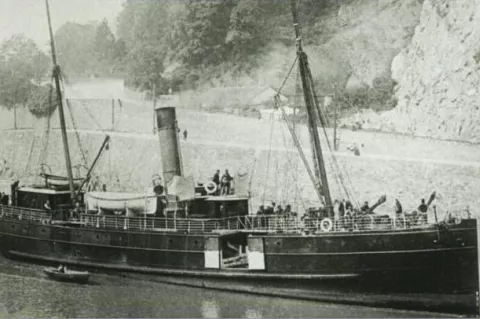
The wreck of the iron steamship City of Hobart has been identified off the Gippsland coast in Victoria, Australia, resolving a maritime mystery that endured for more than a century. Technical divers from Southern Ocean Exploration (SOE) confirmed the wreck’s identity after revisiting a site detected during offshore wind-farm seabed surveys.
The discovery followed years of intermittent search efforts by researchers and divers seeking to locate the long-lost vessel.
Fifty years have passed since the SS Edmund Fitzgerald vanished beneath the waves of Lake Superior during a violent November storm, taking all 29 crew with her. The sinking on 10 November 1975 remains one of the most significant maritime disasters in Great Lakes history, and the ship’s story continues to resonate through the region’s shipping, culture and heritage.
In July 2025, a Lake Michigan tour guide stumbled upon the long-lost SS Frank D. Barker—a two-masted wooden freighter that sank in 1887. Over 130 feet long, the vessel now rests just 24 feet beneath the surface off Door County, Wisconsin, in remarkably intact condition. This discovery concludes a mystery that has endured for nearly 140 years.
After 112 years, the wreck of the SS James Carruthers—a 550‑ft Canadian freighter that vanished during the Great Storm of 191,—is finally located in Lake Huron. Found 20 miles east of Harbor Beach in US waters, the wreck lies upside down at a depth of around 190 feet, offering a poignant reminder of one of the Great Lakes’ most devastating maritime tragedies.
NOAA maritime archaeologists are “blown away and stunned“ by shipwrecks in Lake Ontario. A recent survey conducted within the Lake Ontario National Marine Sanctuary has identified 17 additional shipwreck sites.
A team from the University of Rhode Island conducted a mission using their remotely operated vehicle (ROV), Rhody, to help confirm these new wrecks within NOAA’s protected waters. Researchers were able to map wrecks with centimetre-level accuracy and create photorealistic 3D models thanks to the ultra-high-resolution imaging Stereo Camera that was mounted on the ROV. This advancement will help with the interpretation and preservation of the sites.
After 132 years, the Great Lakes Shipwreck Historical Society (GLSHS) has announced the discovery of SS Western Reserve, a 300ft (~91m) steel steamer that tragically sank in Lake Superior in 1892, resulting in the loss of 27 lives.
The wreck was located approximately 60 miles (~97km) northwest of Whitefish Point in Lake Superior. Utilising Marine Sonic Technology side-scan sonar aboard their research vessel, the David Boyd, the GLSHS team made the initial discovery in late summer 2024. Subsequent deployments of remotely operated vehicles (ROVs) confirmed the ship's identity, revealing that the vessel had broken in two, with the bow section resting atop the stern in approximately 600ft (~183m) of water.
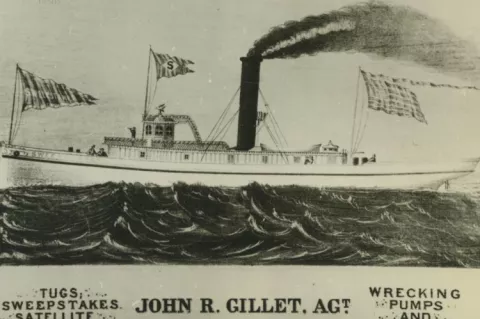
Maritime historians Brendon Baillod and Bob Jaeck have located the long-lost steam tug John Evenson near Algoma, Wisconsin, USA, using historical records and advanced remote sensing technology.
Built in 1884 in Milwaukee, the John Evenson was a 54-foot harbor and towing tug. In June 1895, while aiding the steamer I. Watson Stephenson in maneuvering through the Sturgeon Bay Ship Canal with several schooner barges in tow, disaster struck. As the tug’s captain, John Laurie, crossed the bow of the larger vessel, it collided with the Evenson. The tug capsized and sank instantly. Although four of the five crew members were rescued, fireman Martin Boswell, working below deck, tragically went down with the vessel.
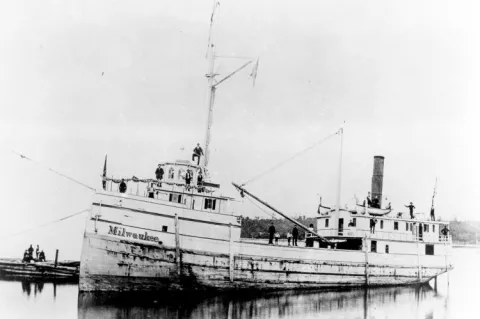
The Michigan Shipwreck Research Association (MSRA) has uncovered the remarkably preserved steamship Milwaukee, which vanished in 1886 after a collision and has been resting in 360ft (100m) of water for over a century.
MSRA located the Milwaukee in June 2023 using side-scan sonar and documented it extensively with an ROV. Still, the discovery was only revealed to an enthralled audience in a live announcement during their annual film festival.
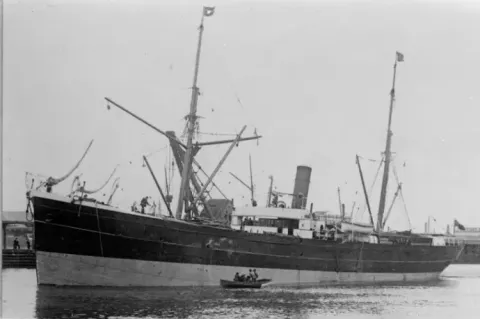
In a serendipitous twist of fate, maritime archaeologists have unveiled the long-lost SS Nemesis, a ship that sank off the coast of New South Wales over 120 years ago.
The discovery, which resolved over a century of mystery surrounding the ship's location, occurred during a standard environmental survey.
The SS Nemesis, constructed in 1873, was a cargo steamer that encountered its premature demise during a ferocious storm in 1901. Since that time, the wreck's position had remained an enigmatic puzzle, baffling historians and the crew's descendants alike. Its unveiling not only concludes a historical narrative but also heralds a new chapter in Australia's extensive maritime legacy.
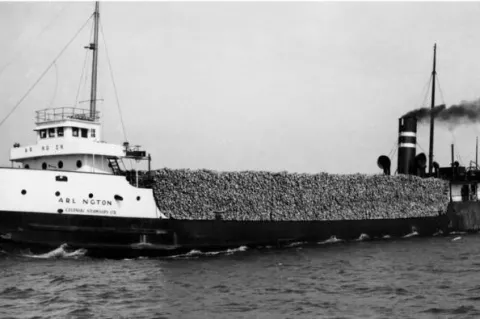
A wreck submerged under about 650 feet of water some 35 miles north of Michigan’s Keweenaw Peninsula, in Lake Superior, has been identified as the Arlington, a merchant ship that sank in stormy weather in 1940.
After finding a particularly deep anomaly in his search for shipwrecks in Lake Superior, shipwreck researcher Dan Fountain reached out to the Shipwreck Society to help identify it. This resulted in an expedition in 2023 that culminated in the positive identification of the anomaly being the SS Arlington, which sank in 1940.