I was amazed when all the little backscatter dots that ruined my image disappeared with a single click. Backscatter Xterminator is an excellent gift for underwater photographers.
Every underwater photographer has experienced the frustration: you've captured a perfect shot, perhaps one you've been planning for, only to find it marred by backscatter. The hours spent in Photoshop or Lightroom, painstakingly removing hundreds of these pesky dots, often end in dissatisfaction.
Thankfully, those days are over. Erin Quigley, a renowned American underwater photographer and image editing expert, has developed a solution: the Backscatter Xterminator Photoshop plugin. This tool, designed for ease of use, is a game-changer in the world of underwater photography.
The camera is the latest and third generation of its popular permanently-sealed Micro camera series. The camera is leak-proof with no O-rings to lube or maintain, so there is never a worry about flooding the camera.
Like its forerunners, the Micro 3.0 features an ergonomic, compact design with easy to-use controls and menus. The camera has a 16-megapixel Sony® CMOS image sensor and offers 4K ultra-high-definition video.
It is robust yet lightweight, making it ideal for both underwater and land activities. It is dust and stain resistant, and shockproof for drops up to 2 meters (6.5 feet). It features a four-times optical zoom (4.9mm to 19.6mm) and digital zoom extending up to 24 times, ensuring detailed shots.
The 16.35-megapixel back-illuminated CMOS sensor delivers sharp images.
This convenient flip adapter, capable of accommodating two M67 lenses, transforms any 67mm-threaded port into a versatile diopter holder, providing easy access to two macro lenses. Crafted from robust, hard-anodised aluminium, this adapter ensures secure attachment to ports with 67mm threads. Its clip-lock mechanism guarantees that lenses remain securely in place during intense shooting sessions.
Since the development of the digital photography revolution in the early 2000s, there have been many attempts to describe or define image quality in simple terms, including factors such as megapixels, resolution, sensor size and photosite size. These factors are related but not interchangeable.
Megapixels were an early attempt to describe quality by multiplying the pixel dimensions of a photo. For example, 2,000 pixels wide multiplied by 1,500 pixels high equals 3,000,000 pixels, or three megapixels (3MP). One megapixel equals one million pixels.
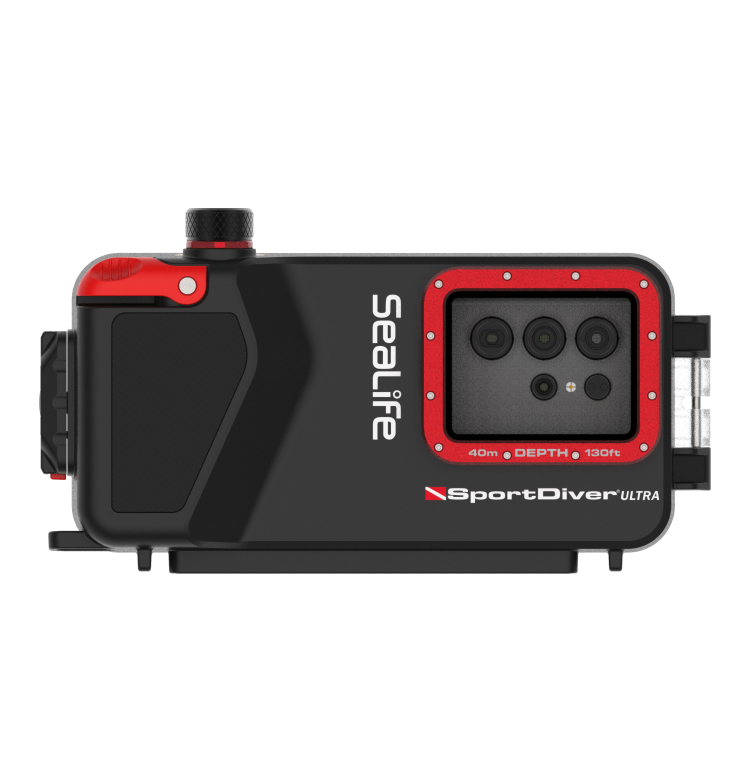
Boasting numerous design enhancements over the original acclaimed SportDiver model, the Ultra version offers universal compatibility with virtually all smartphones, including iPhones 8 and later models, as well as larger Android devices like the Samsung Galaxy Ultra series.
Engineered with an unwavering commitment to excellence, the SportDiver Ultra allows divers and snorkelers to capture stunning photos and videos with their smartphones down to depths of 130 feet (40 meters).
The SeaLife SportDiver Ultra is a compact and lightweight underwater housing designed for smartphones, enabling divers to capture photos and videos down to depths of 40 metres (130 feet).
The housing is compatible with most Android models, including larger models such as the Samsung S Series Ultra and Google Pixel devices, as well as all iPhones from iPhone 8 through iPhone 15 Pro Max. It pairs seamlessly with the free SportDiver App, which is available on the App Store and the Play Store.”
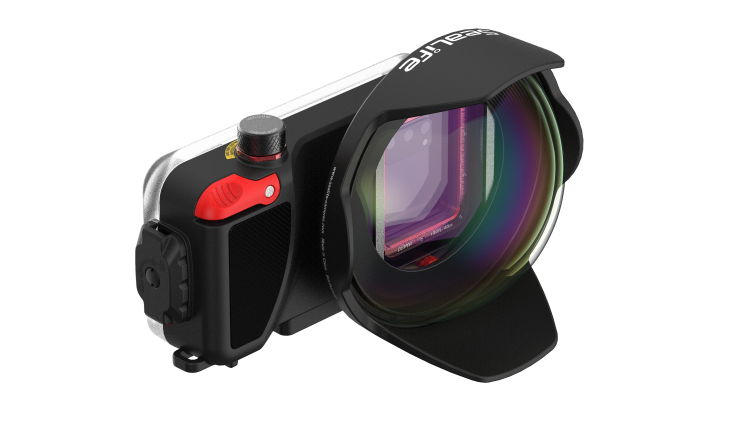
SeaLife, the leading maker of underwater imaging gear, has introduced a new Wide Angle Dome Lens for their popular SportDiver underwater smartphone housing that increases the phone’s camera lens field-of view by 40% and allows photographers to get closer to the subject while fitting everything into the image frame.
The 0.71x dome lens requires no skill, training, or adjustment; simply mount it and shoot. Split shots that split the topside view with the undersea view are especially easy. There’s a safety lanyard included to keep the lens with the housing should it get bumped off.

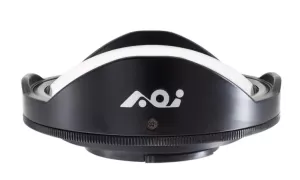
Providing a magnification of 0.73x and wider 140° view underwater, this wide-angle conversion lens is compatible with GoPro and most action cameras, as well as smartphones.

With a body and lens hood made of black hard-anodized aluminum alloy, the internal lens elements comprise four glass elements and four groups with multiple layers of anti-reflective coating. Comes with a QR2 quick-release bayonet mount system, lens secure line, rear cap cover, neoprene dome cover and larger neoprene pouch for transport to protect its polycarbonate front dome element with hard coating. Depth-rated to 60m (200ft), it measures 99mm in diameter and 40.3mm in height, with a weight of 331g on land and 170g underwater.
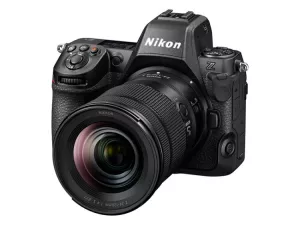
Nikon claims that "the Z8 condenses the advanced functionality and performance of the flagship Nikon Z9 into a compact and lightweight body while also maintaining superior robustness and reliability." The Z8's body is 15% smaller than the well-liked D850 and about 30% smaller than the Z9's.