ADMAT is back in action, this time in the Philippines where we have organised a maritime archaeological survey-training project in a beautiful and historically significant area. BSAC, the British Sub Aqua Club, have asked us to run this as an expedition, which we are, but as it is an ADMAT project it is open to all as usual.
Factfile
The Anglo~Danish Maritime Archaeological Team, or ADMAT for short, is a non-profit organisation set up to investigate, promote and protect historic shipwreck sites through field projects and education. Their projects are carried out as field schools and are also open to qualified divers, who are trained and under the guidance of experienced staff.
ADMAT was founded by Dr. Simon Q. Spooner from England and Christine Nielsen from Denmark, hence the name Anglo~Danish. During work on historic shipwrecks in the North Coast of the Dominican Republic, they realised the great need for maritime archaeological work to be carried out, to protect shipwrecks from damage by looters and weather, and to investigate the shipwrecks in the most danger in coastal areas.
Also, they recognised the need to make it possible for archaeological students to get hands on practical field experience, as well as informing the general public about the wealth of historical information lying at the bottom of the sea, and the importance of protecting it. Since the beginning of ADMAT, many individuals as well as organisations and museums from around the world, have volunteered to assist ADMAT in their endeavour.
www.admat.org.uk/phil1.htm
The Philippines were an important trading centre for the ancient Chinese and the Spanish, but many ships perished in typhoons that still rip through here part of the year. Maricaban Island was used as a safe anchorage as vessels sort refuge from the tropical storms. This is a unique opportunity to join a maritime archaeological training expedition.
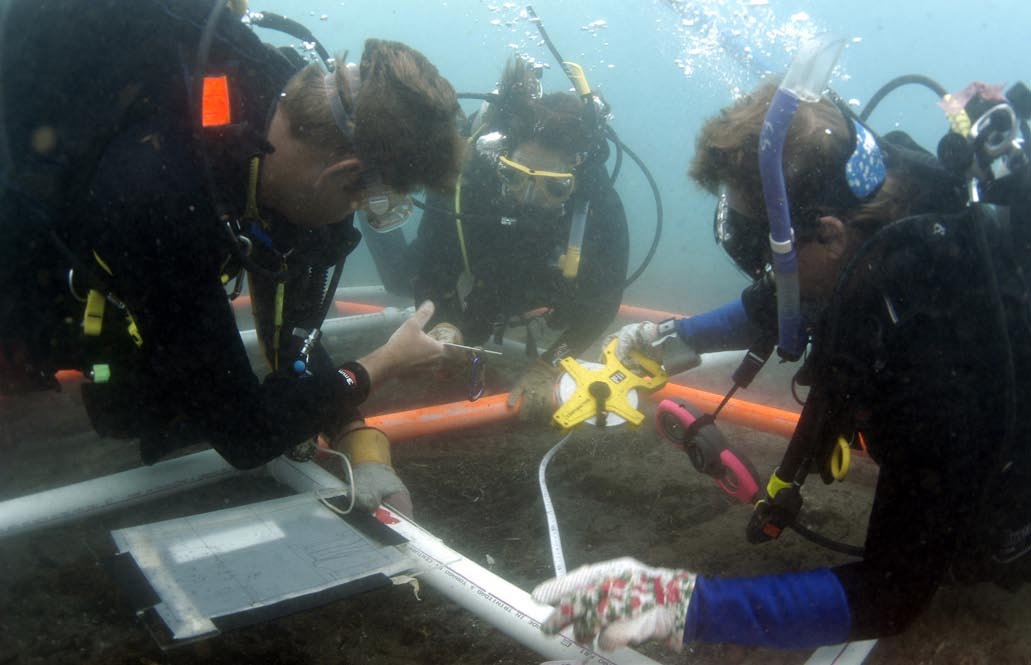
The expedition will be conducting an archaeological training survey, to solve the mystery of why 16th-century Chinese pottery shards are being found off the beach. We will be training the team on how to use side-scan sonar, magnetometers, and traditional survey techniques.
All archaeological training will be given to the expedition members, including ADMAT’s own Underwater Survey Diver course Pt 1&2, Proton Magnetometer Diver Course (both PADI SDC unique to ADMAT) and various relevant archaeological courses will also be run. These are very practical courses, with as much diving as we can do, this is not a beach holiday. Most of the survey site is approximately 10 metres deep, although some areas may go down to 30 metres.
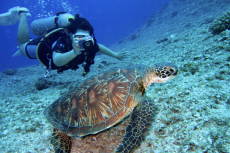
Turtles, stingrays and sharks are common in the area and there is ample opportunity for underwater photography among the nearby rich corals. The expedition leader is Dr Simon Spooner, a well-known maritime archaeologist, founder of ADMAT, and Research Associate at the Centre for Maritime Archaeology and History, University of Bristol. The expedition will be based at the resort on Maricaban Island, three hours south of Manila.
The island is ten kilometres long and two kilometres wide, with no roads or vehicles, surrounded by gin clear blue waters and rich coral with an abundance of colourful marine life. The resort is a small, local style family run guesthouse. It is a two-storey building made of concrete and local bamboo right on the beach. The eight rooms are double or triple occupancy with single beds, wall fan, toilet and shower. The ocean is just a few meters away, with two small islands a few hundred meters away in the channel, making a superb relaxing view.
A special weekend trip to Coron Bay is planned, for those who want to do large wreck diving. This will be in the middle weekend of each trip. The WWII wrecks in Coron Bay have been one of the Philippines’ best-kept diving secrets. In September 1944, Admiral “Bull” Halsey stumbled on a camouflaged Japanese fleet ahead of the US landing on Leyte. Carrier-based bombers sank 24 vessels, leaving a ghost fleet of Japanese hulks
Published in
-
X-Ray Mag #3
- Read more about X-Ray Mag #3
- Log in to post comments