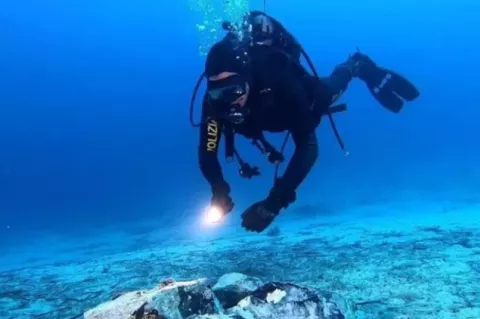
More than 300 amphorae recovered from a 5th to 4th-century BC shipwreck off Calabria may help archaeologists reconstruct ancient wine-trade networks across Magna Graecia and the wider Mediterranean.
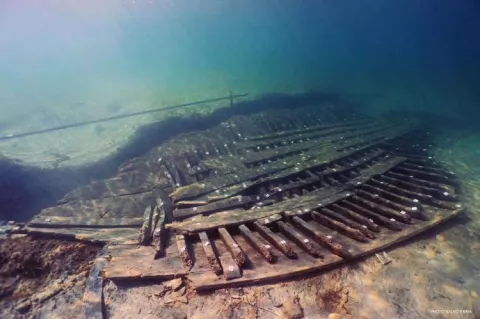
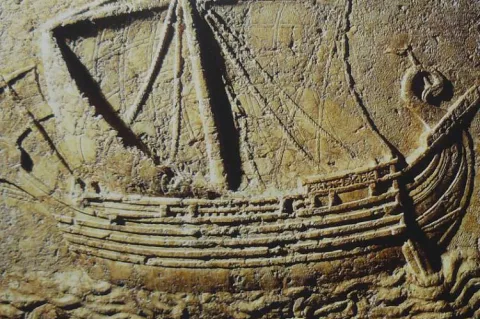
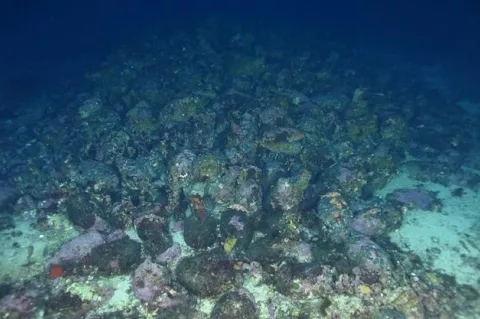
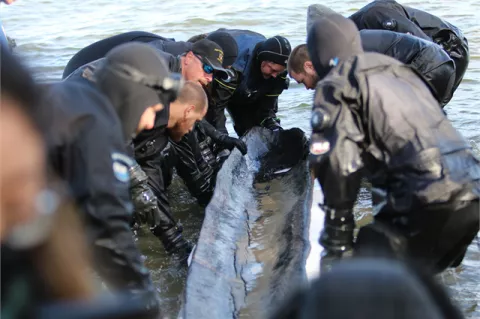
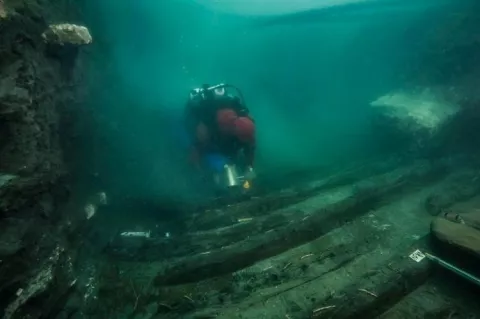
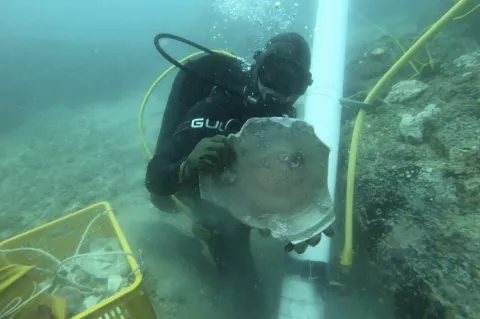
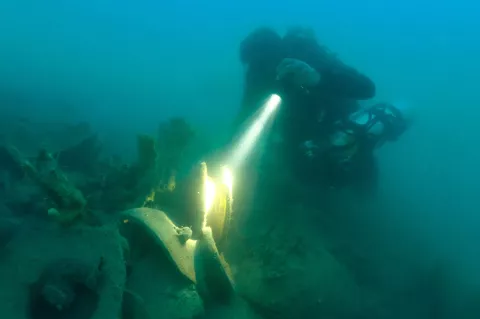
Italian archaeologists have begun detailed study and recovery operations on a 5th to 4th-century BC shipwreck discovered off the coast of Calabria, southern Italy. The site contains a cargo of more than 300 amphorae and could yield new insights into ancient trade routes linking the Greek colonies of Magna Graecia with the wider Mediterranean world.
Archaeologists have uncovered a well-preserved Roman-era shipwreck and cargo at the bottom of Lake Neuchâtel, which provides new insights into ancient trade routes and transportation systems.
The discovery of a 2,000-year-old shipwreck in the depths of Lake Neuchâtel offers new perspectives on inland water transport during the Roman period. The vessel, located in deep freshwater, has remained largely intact, keeping both cargo and structural elements.
Recovered artefacts include wooden components, metal fittings, and items potentially related to transport or ceremonial functions, such as parts associated with a Roman chariot. The preservation of these materials is rare and provides important evidence of regional craftsmanship and supply practices.
Archaeologists have uncovered the well-preserved remains of an ancient Greek merchant ship off the coast of Ispica, Sicily. The vessel is believed to date from the 6th to 5th centuries BC, making it over 2,600 years old and among the oldest Greek wrecks located in the central Mediterranean.
The 5th-century vessel, Gela II, discovered near Gela, Sicily, is set for recovery, offering insights into ancient maritime trade and the enigmatic metal orichalcum.
In a significant archaeological endeavour, the 5th-century Greek shipwreck known as Gela II is slated for recovery from the seabed near the port of Gela, Sicily. Identified in 1990, this ancient vessel has intrigued researchers due to its cargo, including Corinthian helmets and ingots of orichalcum—a metal historically considered second to gold in value.
Egyptian authorities have successfully intercepted an illicit operation involving the theft of nearly 450 artefacts recovered from the seabed in the Abu Qir Bay near Alexandria. The artefacts, believed to date back to the Greek and Roman periods, were seized from two suspects who were planning to sell them on the black market.
Marine archaeologists have uncovered the well-preserved, intricate marble floor of a Roman villa in the submerged ancient spa town of Baiae in the Gulf of Naples.
The mosaics, featuring intricate geometric patterns and vibrant colours, are remarkably well-preserved. The find is considered part of a larger Roman villa or public building that was lost to the sea between the third and fifth centuries as underground magma chambers caused the surrounding terrain to fall.
Two divers uncovered Israel's biggest find of underwater Roman-era artifacts in three decades, archaeologists said on Monday. The ancient shipwreck was found in the shallow waters of the ancient Roman port of Caesarea, on the Mediterranean Sea.
The treasures were first spotted in late Apri by divers Ran Feinstein and Ofer Raanan but it took an underwater survey conducted in recent weeks to reveal the extent of the find.
As soon as they emerged from the water divers Ran Feinstein and Ofer Ra‘anan of Ra‘anana contacted the Israel Antiquities Authority and reported the discovery and removal of several ancient items from the sea.
The underwater studies in Parion, a 2,700-year-old port city from the Roman Empire in the village of Kemer in the Biga District of Çanakkale in northwestern Türkiye, have revealed the presence of the second ancient port of the city. This discovery is the second of its kind in the region and emphasises Parion's historical significance in Roman trade and military operations.
This ancient vessel, dating back approximately 3,300 years to the Bronze Age, offers invaluable insights into early seafaring and the maritime trade networks of the time.
The shipwreck was found at a depth of 1800m, some 90km from shore, during a survey by a natural gas company, Energean. The wreck is believed to date from a period known for significant cultural and trade exchanges across the region. Artefacts recovered from the site include pottery, weapons, and tools, suggesting that the ship was part of extensive trade routes connecting ancient civilizations across the Middle East, Egypt, and possibly even further afield.
The ship, called Ses Fontanelles, sank off the coast of Mallorca, Spain, and was discovered in 2019. It had travelled from Cartagena in southeastern Spain and was carrying various goods stored in amphorae when it sank.
New type
Among the cargo, archaeologists found a new type of amphora, larger and heavier than the others, which was used for transporting plant oil. This type was named Ses Fontanelles I, after the ship. The amphorae were found in the ship's centre and stern, while smaller containers were located near the bow and sides.