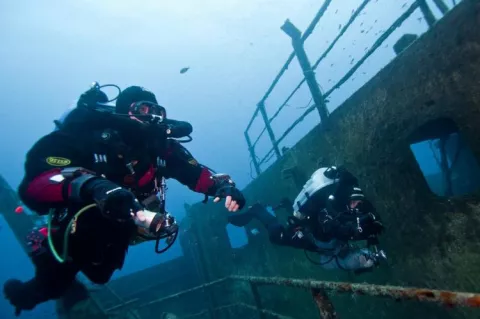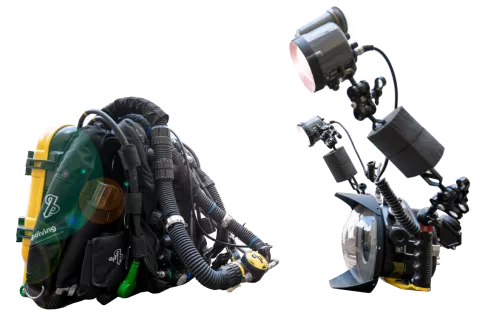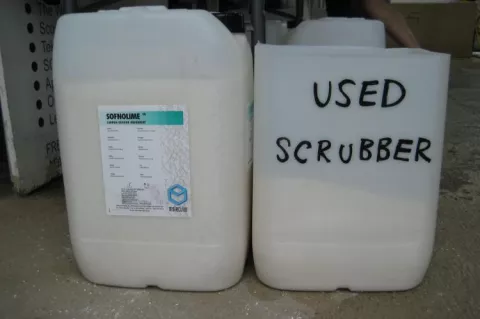
The British scuba equipment manufacturer has suffered a number of business frustrations following Brexit, and the UK's withdrawal from the European Union on 31 January 2020.
Martin Parker and the team at APD have therefore established AP Diving Europe. This will enable EU customers to purchase products in Euros. The goods will then be delivered by post or carrier direct from mainland Europe. This will mean EU customers will avoid import hassles, paperwork, VAT and customs handling fees.
Some 80km south of Copenhagen, about one hour’s drive, in what appears to be just some ordinary and inconspicuous farm buildings surrounded by fields out in the countryside, we find JJ-CCR—manufacturer of world-renowned closed circuit rebreathers.
I have known this company since its inception. JJ-CCR is founded and headed by Jan Petersen, whose expertise is in machining, but it was another Jan, surname Jørgensen, who certified me on the Inspiration Classic, a little over 20 years ago. Around that time, Jørgensen also happened to certify Petersen, and the two Jans—hence the name “JJ”—got into a fruitful discussion about designing and building a new rebreather, which led to the development of the first prototype in 2005.
Nowadays, more and more recreational divers are coming into contact with technical rebreather divers, perhaps even being buddied up with one on a dive. What follows are some good things for open circuit divers to know about closed circuit rebreathers. Michael Rothschild gives us a quick glimpse into rebreather diving and what one can expect when diving in a mixed team.
With the increasing popularity of rebreathers, it is becoming more and more likely that an open circuit (OC) diver will be buddied up with someone on a closed circuit rebreather (CCR). This may be a regular team, or a buddy pair formed when two people who are vacationing alone decide to dive together. It is even possible that an OC diver will encounter a rebreather diver from another team, and rescue or assistance might be necessary.
If you are able to travel at short notice, there's a last-minute opportunity to join the Maldives 'Blue Force One'. You could be boarding this premier boat in three weeks' time, and diving the classic 'central Atolls route'.
The aim is to find hammerheads, dolphins, eagle rays and shoals of colourful fish
After such a long lay-off out of the water, it is not surprising that several agencies are issuing safety statements as Covid-19 pandemic lockdowns are relaxed, and divers around the world get ready to resume diving.
A number of new products are normally launched at the start of April, and this year did not disappoint.
Molecular Products have proudly unveiled two new versions of their popular 797 sofnolime today. We gather that it has been specifically targeted at the diving market, enabling rebreather divers to purchase a flavoured sorb.
This new range has been launched with two flavours; strawberry and mint. The idea is that the taste fades as the sorb life diminishes, giving the diver an additional way to track carbon dioxide breakthrough.
I heard the strawberry is really good one. Teppo Lallukka
Sorb Advice
On the back of this news, four rebreather instructors have issued some timely advice regarding sorb.
Sally Cartwright - expedition CCR diver, and former chairman of the Sub Aqua Club - stated "Life is far too important and precious. Don't skimp on lime. People try and save money on fills and push their scrubber time. It's not worth it."
Oxygen sensors, or "cells," which are used in rebreathers have a limited shelf life and need to be replaced every 12 to 18 months. However, new ones are currently not available to the dive community.
In the United Kingdom, oxygen cell manufacturers have been mandated by the UK government to supply cells to the medical industry, leaving the dive community with back orders.
If you are a certified rebreather diver and you have experienced a caustic cocktail, or have dived with someone who has experienced a caustic cocktail, please participate. You can find the link to the survey in the 'Sources and References' box at the end of this article.
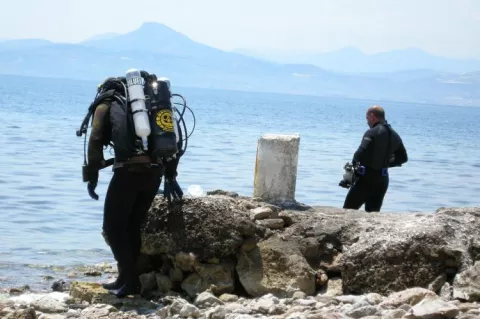
To this end RoSPA worked with a number of rebreather industry experts to identify key safety issues.
RoSPA Video
The result was a film that gives divers and those new to rebreathers a solid awareness of the key safety factors for diving with rebreathers.
Eight years ago today – Friday 18th May 2012 – this film was unveiled at a very important international safety symposium called Rebreather Forum 3. In fact ‘CCR Aware‘ opened #RF3.