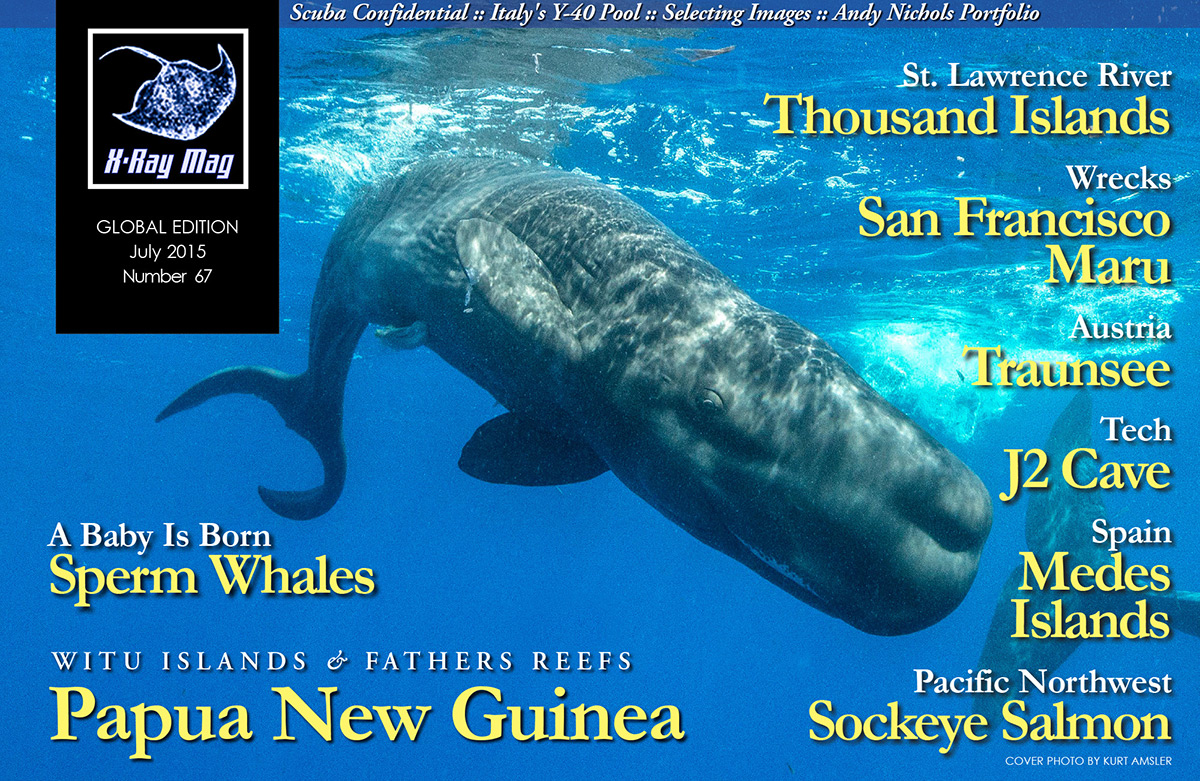
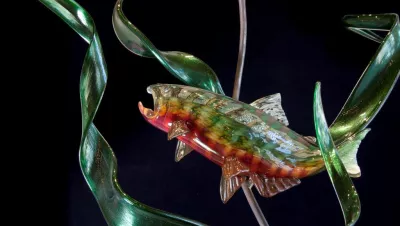
American artist Andy Nichols creates vibrant sculptures of migrating salmon, fish and coral reefs in blown glass. After 20 years in the restaurant business, he opened his own glass studio in the Dalles, Oregon, where he continues to develop his own unique, signature style.

X-Ray Mag #67
Click HERE ⬇︎ to download — Links open in a new window
X-Ray Mag Global edition ~50 Mb
Feature articles in this issue with stand-alone pdfs
While Traunsee is mostly known for its endless sloping rock faces, the deepest lake in Austria has much more to offer. Caves, archways, wrecks and fish-rich shallow waters make it an all-rounder as Wolfgang Pölzer explains in this introduction to one of his favorite haunts.
Scuba instructors and divemasters may be heroic, caring people but they don’t always make perfect role models!
It took only a year to transform the idea of a super pool—40 meters deep—from concept to blueprint and alluring 3D renditions, before it opened its doors to the public in June 2014.
1,000 hours under the earth. This is the tale of the expedition, led by deep cave explorer Bill Stone, to J2 Cave, located in the Sierra Juárez Mountains of northeastern Oaxaca, México, as told by team member and lead diver, Phil Short.
At a glance, the Medes Islands doesn’t look like much—some 50 odd acres of craggy outcrops sitting close to shore, just opposite the small fishing village and resort town of L’Estartit, along the Spanish coast of Costa Brava. Little, if anything, gives away the fact that it is a marine national park boasting some of the most renowned diving in the Mediterranean.
Divers who need to use contact lenses, or masks with corrective lenses, and do not want to undergo laser surgery may consider a fourth but lesser known option in the form of so-called night lenses. Wolfgang Pölzer shares his experience.
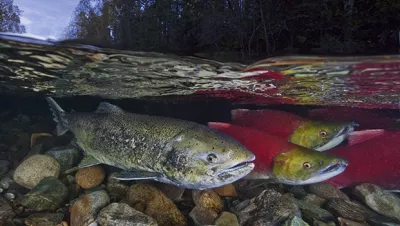
We walked nearly a mile along the riverbank before finding a place where we could easily enter with our heavy equipment. The rotting carcasses of dead fish lay along the banks, and the associated stench was overpowering. It was late September 2010, and we had come to photograph an enormous migration of sockeye salmon, the largest run of sockeye in a century. We had already photographed in quiet, shallow creeks, capturing images of individual fish or small groups arriving at their final destination hundreds of miles from the sea. Today, our goal was more ambitious: to capture underwater images of the huge aggregation of salmon battling the swift current of the Adams River.
We walked nearly a mile along the riverbank before finding a place where we could easily enter with our heavy equipment. The rotting carcasses of dead fish lay along the banks, and the associated stench was overpowering. It was late September 2010, and we had come to photograph an enormous migration of sockeye salmon, the largest run of sockeye in a century. We had already photographed in quiet, shallow creeks, capturing images of individual fish or small groups arriving at their final destination hundreds of miles from the sea. Today, our goal was more ambitious: to capture underwater images of the huge aggregation of salmon battling the swift current of the Adams River.
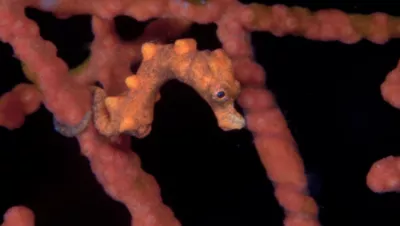
When it comes to superlatives, diving and Papua New Guinea certainly go hand in hand. Sharing the world’s second largest island with Indonesian West Papua, the island nation is positioned at the easternmost extremity of the Pacific’s famed Coral Triangle—an undersea Eden boasting an unrivalled diversity of life.
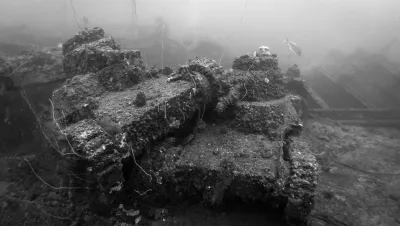
Truk Lagoon (now known as Chuuk) plays host to what is usually considered the world’s best wreck diving. World War II ships, planes, tanks, trucks, and military artifacts abound at recreational dive limits in Micronesia’s calm, warm waters. The abundant marine life has transformed the former war vessels into stunningly beautiful artificial reefs.
Truk Lagoon (now known as Chuuk) plays host to what is usually considered the world’s best wreck diving. World War II ships, planes, tanks, trucks, and military artifacts abound at recreational dive limits in Micronesia’s calm, warm waters. The abundant marine life has transformed the former war vessels into stunningly beautiful artificial reefs.
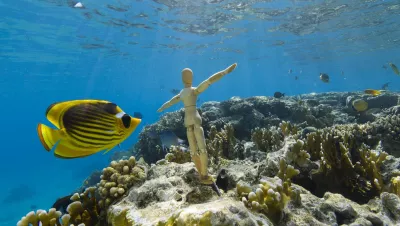
Photo by Rico Besserdich
The more photos we shoot, the more we also have to sift through the numerous images, and the more challenging it becomes to pick out a selection that represents a specific location or subject matter well. Which ones to keep and process and which ones to bin is the question. Rico Besserdich gives you some pointers.
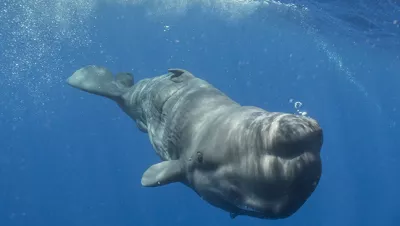
— Faial Island, Azores, September 2014. For five days, we have cruised the islands of Faial and Pico in the Azores. Nine hours on the small boat is tiresome and long, but necessary for close encounters with the giant sperm whales of the Atlantic.
— Faial Island, Azores, September 2014. For five days, we have cruised the islands of Faial and Pico in the Azores. Nine hours on the small boat is tiresome and long, but necessary for close encounters with the giant sperm whales of the Atlantic.
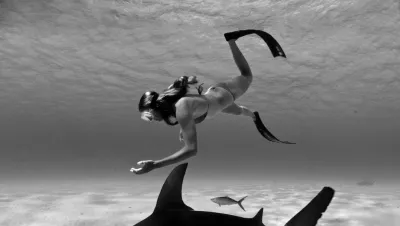
First described in 1837 by the German naturalist Eduard Rüppell, the great hammerhead shark (Sphyrna mokarran) is the largest of the hammerhead shark family and can reach a length of over 6m (20ft), although some specimens have been seen to be much larger than this. However, with overfishing, the great hammerhead is usually observed to be much smaller than this. Large congregations have been seen off the Galapagos, Cocos Island and a few small islands in the Indo Pacific—that we know off. I say that, only because there are so many island groups and atolls in the Indian Ocean and the Pacific that are never dived, that we have no idea of what can be found there.
First described in 1837 by the German naturalist Eduard Rüppell, the great hammerhead shark (Sphyrna mokarran) is the largest of the hammerhead shark family and can reach a length of over 6m (20ft), although some specimens have been seen to be much larger than this. However, with overfishing, the great hammerhead is usually observed to be much smaller than this. Large congregations have been seen off the Galapagos, Cocos Island and a few small islands in the Indo Pacific—that we know off. I say that, only because there are so many island groups and atolls in the Indian Ocean and the Pacific that are never dived, that we have no idea of what can be found there.
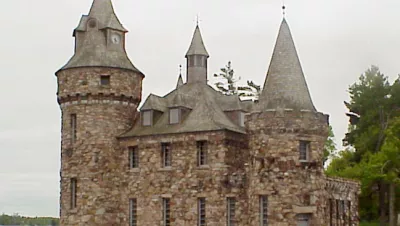
Within a day’s drive from New York City is a wreck junkie heaven, with numerous shipwrecks to explore along the St. Lawrence River on the US-Canadian border, in the area called the Thousand Islands. Larry Cohen and Olga Torrey give a sampling of the wrecks in the region popular with both the American and Canadian diving communities.
Within a day’s drive from New York City is a wreck junkie heaven, with numerous shipwrecks to explore along the St. Lawrence River on the US-Canadian border, in the area called the Thousand Islands. Larry Cohen and Olga Torrey give a sampling of the wrecks in the region popular with both the American and Canadian diving communities.