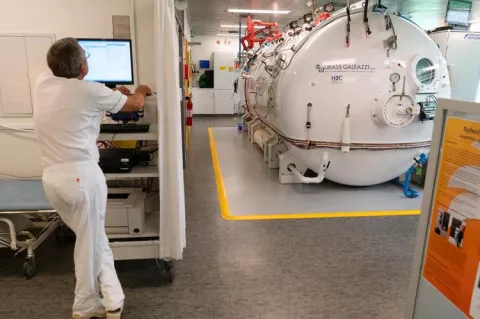
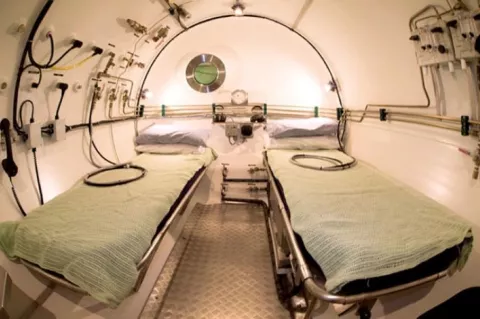
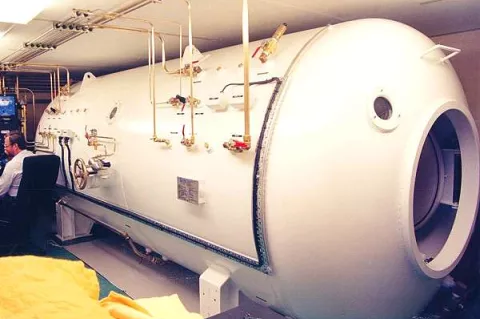
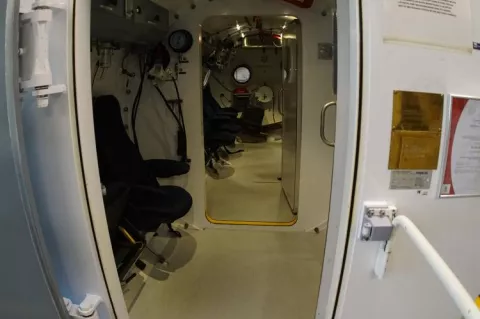
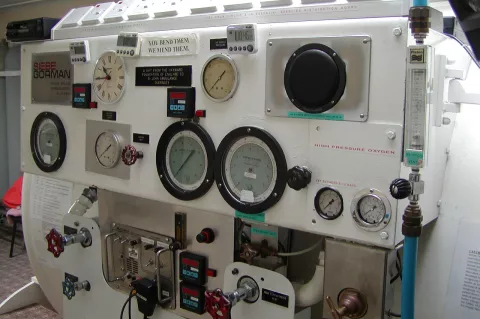
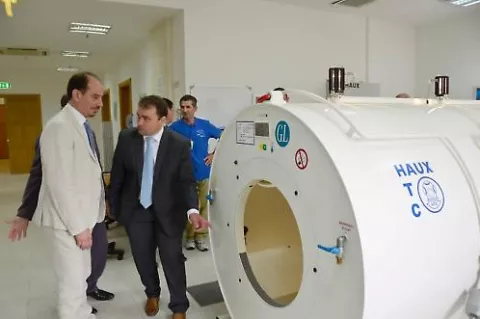
A tragic incident in Arizona on 11 July has ignited some public debate and concerns around the safety of hyperbaric oxygen therapy. A physical therapist died following a flash fire inside a hyperbaric chamber at a health and wellness clinic in Lake Havasu City, which was not a medical-grade hyperbaric therapy facility. This is the second such fatality reported in the United States this year. In a similar case, a 5-year-old boy died in February when an oxygen-rich chamber exploded at a Michigan clinic.
In a move causing widespread concern within the diving community, NHS England has announced plans to reduce the number of commissioned hyperbaric oxygen therapy (HBOT) centres from ten to six.
This decision follows a recent procurement process where three recompression chambers in the Midlands, North West, and North East of England were unsuccessful in their bids to continue providing HBOT services. The British Sub-Aqua Club (BSAC) warns that this could leave vast regions without accessible treatment for decompression illness (DCI) and arterial gas embolism (AGE), conditions that require immediate medical attention.
A new hyperbaric oxygen therapy (HBOT) facility has been launched in Nadi, Fiji, marking a significant step forward for the region’s thriving diving industry and healthcare services. Operated by PSH Hospitals, the facility is set to provide life-saving decompression treatment for divers while also supporting medical tourism and local healthcare needs.
The introduction of a hyperbaric chamber in Boracay marks a significant step forward in enhancing medical support for divers and strengthening the island's tourism infrastructure.
Located strategically within the Boracay district hospital, the new hyperbaric chamber aims to significantly improve safety and healthcare for divers, addressing decompression sickness and other dive-related health issues more effectively.
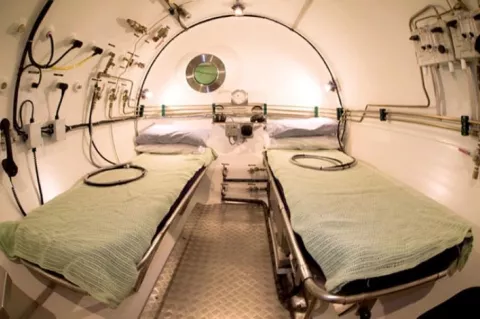
The National Health Service (NHS) has withdrawn its funding for the Oban Hyperbaric Chamber with immediate effect, leaving the entire west coast of Scotland without an NHS-registered treatment facility, according to the operator.
The abrupt discontinuation of NHS funding for the Oban Hyperbaric Chamber has been confirmed, prompting substantial concern within the diving community. This development effectively leaves the west coast of Scotland without an NHS registered facility to treat decompression illness, a critical service for divers.
Hyperbaric chambers from New Orleans to Tampa are filled with Covid-19 patients and facilities are unable to offer emergency hyperbaric services to other patients such as divers.
In a region already woefully short of adequate hyperbaric emergency services for divers, chambers from Mississippi to Northwest Florida are reportedly now filling up with Covid-19 patients fighting for their lives.
As reported earlier on this site, the closest decompression chambers to the popular Oriskany dive site and Florida Panhandle Shipwreck Trail are in Mobile, Alabama which is out of state—or in Fort Myers, more than 600 miles away.
This resulted in 39 hyperbaric sessions, because some of the divers needed several therapy sessions.
Apparently, 2019 was the busiest year in the last decade for the Oban (Scotland) based chamber. Most of the patients were recreational divers; however, commercial divers working at fish farms or in civil engineering were also treated.
A new diving and underwater research company in Oban, Scotland is now managing the hyperbaric therapeutic facility at Dunstaffnage, after it was threatened with closure.
Tritonia Scientific has taken over the operational management of the chamber after the Scottish Association for Marine Science (SAMS) indicated it could no longer support the facility.
This unit provides emergency treatment for divers who are suffering from decompression illness.
The closest decompression chambers to the popular Oriskany dive site and Florida Panhandle Shipwreck Trail are in Mobile, Alabama which is out of state - or in Fort Myers, more than 600 miles away.
Although Visit Pensacola promotes the Oriskany dive site and Florida Panhandle Shipwreck Trail, it has not been made aware of the safety concerns rover the region's lack of hyperbaric chambers to treat decompression sickness Nicole Stacey, spokeswoman for Visit Pensacola, told Pensacola News Journal on Thursday.
She said Visit Pensacola was not involved in any effort to try to improve emergency treatment options for divers and would rely on the diving industry and those professionals in the area to remedy the situation.
According to Philippine Department of Tourism Director (DOT) Robert Alabado, the facility is expected to open at the Southern Philippines Medical Center (SPMC) in Samal this October. The hyperbaric chamber will ensure divers receive efficient medical support when diving off Samal Island, situated off Davao in Mindanao.