  • Sportsdykkeren.dk 🇩🇰
  • XRay-Mag.SE 🇸🇪
  • Dykmässan (diveshow)

Secondary menu - Advertising and subscriptions

  • Got stories? - Guidelines
  • Advertising
  • Subscribe to X-Ray Mag
Home
  • Magazine
  • News
      1. Latest news
      2. Press releases
      3. Breaking News
  • Travel
      1. Destinations
        1. Australia & New Zealand
        2. Continental Asia
          • Japan
          • China
          • South Korea
        3. Southeast Asia
          • Indonesia
            • Bali
            • Komodo
            • Lembeh
            • Maluku
            • Raja Ampat
            • Sulawesi
          • Malaysia
          • Papua New Guinea
          • Philippines
          • Thailand
          • Timor-Leste
        4. South Pacific & Oceania
          • Fiji
          • French Polynesia
          • Micronesia
            • Chuuk (Truk)
            • Marshall Islands
            • Yap
          • Palau
          • Samoa
          • Solomon Islands
          • Tonga
          • Vanuatu
        5. Indian Ocean
          • Madagascar
          • Maldives
          • Seychelles
        6. Red Sea
        7. Africa
          • Egypt
          • Malawi
          • Mozambique
          • Namibia
          • South Africa
          • Sudan
          • Tanzania
        8. Mediterranean & Adriatic
          • Croatia
          • Cyprus
          • France
          • Greece
          • Italy
          • Malta & Gozo
          • Portugal
          • Spain
          • Turkey
        9. Europe
          • Northern Europe
            • Denmark
            • England
            • Finland
            • Iceland
            • Ireland
            • Norway
            • Scotland
            • Sweden
          • Eastern Europe
            • Albania
            • Bosnia-Hercegovina
            • Croatia
            • Czech Republic
            • Hungary
            • Poland
            • Russia
              • Northwest Russia
              • Russian Far East
              • Siberia
          • Western Europe
            • Austria
            • France
            • Germany
            • Switzerland
          • Southern Europe
            • Cyprus
            • Greece
            • Italy
            • Malta & Gozo
            • Portugal
            • Spain
        10. Atlantic
          • Azores
          • Canary Islands
          • Falkland Islands
          • St Helena
        11. North America
          • Canada
          • Great Lakes
          • United States
            • East Coast
            • West coast
            • Alaska
            • Hawaii
            • US Virgin Islands
            • Guam
          • Mexico
        12. Caribbean & Central America
          • Bahamas
          • Belize
          • Cayman Islands
          • Bonaire
          • Cuba
          • Dominican Republic
          • Mexico
          • Columbia
          • Grenada
          • Costa Rica
          • Saba
          • Honduras
          • Turks & Caicos
          • US Virgin Islands
          • Nicaragua
        13. South America
          • Argentina
          • Brazil
          • Ecuador
        14. Polar Regions
          • Artic
          • Antarctica
      2. Promotions
      3. My Favorite Dive
  • Ecology
      1. Ocean Mysteries series by Ila France Porcher
      2. Sharks, Rays and Nudibranch stories by Andy Murch
      3. Sentience
      4. Conservation
      5. Coral Reefs
      6. Dolphins
      7. Fish
      8. Jellyfish
      9. Mantas & Stingrays
      10. Nudibranchs
      11. Octopus & Squid
      12. Sea Turtles
      13. Seals & Sea Lions
      14. Sharks
      15. Whales
  • Wrecks
      1. Vic Verlinden
      2. Ancient Wrecks
      3. Artificial Reefs
      4. Marine Archaeology
      5. Older Warships
      6. Steamships & Cargo
      7. Tall & Wooden Ships
      8. WWI Wrecks
      9. WWII Wrecks
  • Training & Tech
      1. Rebreathers
      2. Sidemount
      3. Deep Wrecks
      4. Cave Diving & Mines
      5. Ice Diving
      6. Diver Health & Safety
        1. Divers Alert Network - DAN
        2. Safety Culture
      7. Adaptive Diving
  • More
      1. Equipment
        1. BCDs, Wings & Sidemounts
        2. Dive Computers
        3. Dive Watches
        4. Drysuits & Undergarments
        5. Hoods, Gloves & Boots
        6. Lamps & Torches
        7. Masks, Fins & Snorkels
        8. Regulators
        9. Wetsuits & Rashguards
      2. Photo & Video
        1. Equipment
          • Cameras & Optics
          • Editing & Post-processing
          • Housings
          • Lighting
          • Useful Tools
        2. Tutorials
          • Techniques & Tips
            • Mike Bartick
            • Rico Besserdich
          • Composition
          • Editing & Post-processing
        3. News & Announcements
        4. Contributors' Picks
      3. Books & Media
        1. Works by our contributors
      4. Profiles & Interviews
        1. In Memoriam
      5. Lifestyle
        1. Portfolios & Ocean Arts
        2. Apres Dive & Apparel
        3. Editorials
      6. Contributors
        1. Pundits
          • Mike Ange
          • Gareth Lock
          • Michael Menduno
          • Mark Powell
          • Simon Pridmore
        2. Regular writers
          • Scott Bennett
          • Andrey Bizyukin
          • Larry Cohen & Olga Torrey
          • Pierre Constant
          • Brent Durand
          • Jennifer Idol
          • Scott Johnson
          • Steve Jones
          • Kate Jonker
          • Kelly LaClaire & Kate Holt
          • Matthew Meier
          • Brandi Mueller
          • Svetlana Murashkina
          • Barb Roy
          • Don Silcock
          • Claudia Weber-Gebert
          • Lawson Wood
        3. Columnists
          • Scott Bennett
          • Rico Besserdich
          • Rosemary 'Roz' E. Lunn
          • Ila France Porcher
  • ⚲ Search
Featured

Crown-of-thorns starfish lie in wait for corals to recover

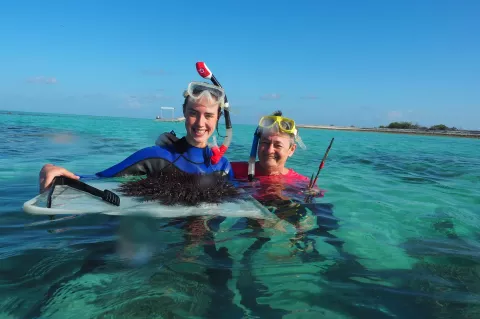
It is common knowledge that the crown-of-thorns starfish is the bane of coral reef communities. What is lesser known is that this species does not feed on only corals. Rather, in its juvenile stage, it feeds on algae. Then, as it matures into an adult, it will switch to a diet of corals.

Researchers Dione Decker (left) and Professor Maria Byrne, with an adult crown-of-thorns starfish at the Great Barrier Reef.
Ecology & Science

It is common knowledge that the crown-of-thorns starfish is the bane of coral reef communities. What is lesser known is that this species does not feed on only corals. Rather, in its juvenile stage, it feeds on algae. Then, as it matures into an adult, it will switch to a diet of corals.

Based on new research reported in the Biology Letters journal, the starfish has the ability to adjust the timing of its dietary change based on the availability of coral in the vicinity.

X-RAY MAGAZINE FEATURE

Shark Fishing: Can Commercial Shark Fishing Be Sustainable?

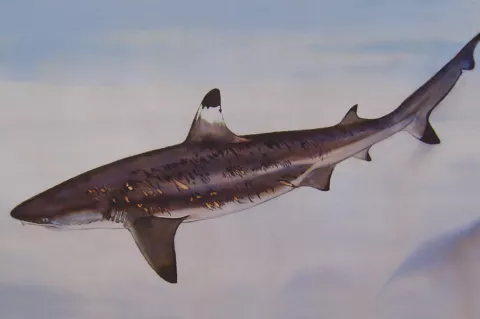
With the loss of at least 90 percent of sharks worldwide, it would seem to be urgent to protect the ones that remain. Every global study of their status has reported a more dire situation than the last, and that the targeted hunt for the shark fin trade is responsible for their catastrophic depletion.

Words:
Ila France Porcher
Images:
Lemon sharks
Download article as pdf
Ecology & Science

Only one-third of shark species are considered safe, and the most threatened are those accessible to fishing—those within about 1,000m of the surface, or, for seafloor dwellers, 3,000m in depth.

Shark fins are among the most expensive seafood products. The total declared value of the world trade in shark products is close to US$1 billion per year and it is associated with much illegal activity, including murder. To supply the trade, intense shark fishing spans all oceans.

Mating Sharks and Tonic Immobility

Shark Tales, in X-Ray Mag's issue #63, focused on pain in fish and sharks, and included a short piece on mating behaviour. The violence of the encounter is typical of mating sharks, thus raising the question of the suffering of the female shark during mating.

mating wounds
Ecology & Science

So I asked leading shark ethologist and behaviourist, Professor Samuel 'doc' Gruber to elaborate. After pointing out how much pain women feel when they give birth, making the point that suffering has no effect on reproduction, he reminded me that sharks evolved their mating behaviours and the physical structures involved, separately from other animals.

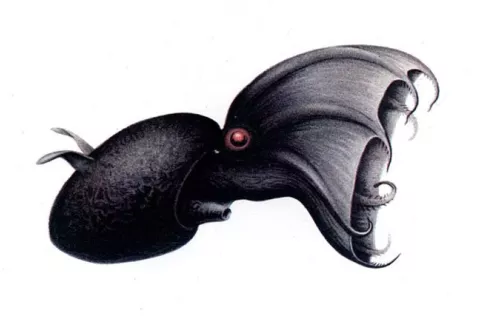
What do vampire squids eat (it's not what you think)

For years, marine biologists have puzzled over what the mysterious vampire squid eats.

Ecology & Science

The vampire squid (Vampyroteuthis infernalis) is a small, deep-sea cephalopod found throughout the temperate and tropical oceans of the world. It's easy to imagine the vampire squid as a nightmarish predator. It lurks in the eternal midnight of the deep sea, has a dark red body, huge blue eyes, and a cloak-like web that stretches between its eight arms.

X-RAY MAGAZINE FEATURE

Shifting Baseline Syndrome: Are you afflicted?

It’s early afternoon. The sun is beating down and mosquitoes are humming. Another decent day’s catch is unloaded, men sweating with the effort. If it weren’t for the breeze, the stench would be unbearable. Today’s tally: more than 100 sharks, some weighing close to 1,000 pounds and reaching nearly 20 feet in length. The catch includes leopard (tiger), dusky, hammerhead, nurse, sand sharks and sawfish—nothing unusual in the shallow (15 feet) waters surrounding Big Pine Key.

Words:
Christine Ward-Paige
Images:
Download the full article as pdf ⬇︎
Ecology & Science

For those who are familiar with Big Pine Key and know that it is located in the middle of the Florida Keys in the southeastern United States, you may be thinking that this story is made up. Yes, you have seen some sharks in the Florida Keys, possibly more than you have seen elsewhere, but not 100 in one day. And definitely not the combination of species mentioned.

Unfortunately, you’re right. A story like this could not be told today, and with good reason, because it describes a scene from the 1920s, commonly documented in newspapers and other publications of the day.

Sperm whales arrange for babysitters

Ocean Warming and Fish Grazing Drive Collapse of Japan's Kelp Forests

Decades of monitoring along Japan's Izu Peninsula reveal how rising sea temperatures and prolonged grazing by herbivorous fish have combined to transform once-productive kelp forests into largely barren rocky reefs.

Ecology & Science

The kelp forests along Japan's Izu Peninsula have suffered extensive losses as warming seas place the seaweed under increasing stress while allowing herbivorous fish to graze for longer periods each year.

A study published in Global Change Biology identifies the combined effects of rising temperatures and intensified grazing as important drivers of the decline of Ecklonia cava, a large brown seaweed known locally as kajime.

Blue Whale Songs May Reveal When Whales Are Feeding

Researchers studying pygmy blue whales off Western Australia have found that singing and feeding follow different daily patterns, suggesting underwater recordings could help scientists monitor feeding activity across vast areas of ocean.

Ecology & Science

The songs of pygmy blue whales may provide scientists with a new way to investigate feeding behaviour without having to observe the animals directly.

A study published in Royal Society Open Science found that eastern Indian Ocean pygmy blue whales generally fed during daylight hours and produced more songs at night during the feeding season.

The findings suggest that changes in the timing of whale songs could provide an indirect indication of feeding activity, potentially improving monitoring of these elusive marine mammals.

Young Manta Rays Depend on Coastal Refuges, Study Finds

Research has revealed how juvenile giant manta rays remain in coastal refuges while adults migrate across Central America, highlighting conservation gaps.

Ecology & Science

New tracking research in Central America reveals that juvenile giant manta rays remain close to shore while adults undertake extensive migrations, highlighting the need to protect both coastal habitats and the routes connecting them.

Young giant manta rays depend heavily on shallow coastal waters before venturing farther offshore as adults, according to new research published in Frontiers in Fish Science.

Nudibranchs: Wonders of the Sea

These tiny, delicate-bodied animals navigate a world of predators, currents and chemical signals in remarkable ways, even turning the weapons of another animal to their own advantage.

White-lined Dirona
Ecology & Science

Nudibranchs comprise a group of marine gastropod molluscs related to snails and sea slugs. Their name means “naked gills”, referring to the exposed respiratory structures of many species. Yet unlike most familiar snails, adult nudibranchs have no external shell. 

Marine Heatwaves Disrupt Humpback Whale Nutrition and Reproduction

New research reveals how marine heatwaves alter humpback whale metabolism and nutrient use, potentially compromising pregnancy and reproductive success.

Humpback whale and calf
Ecology & Science

Chemical records preserved in whale baleen reveal how prolonged ocean warming can alter metabolism and energy use, potentially making it harder for humpback whales to sustain pregnancies.

Marine heatwaves may affect humpback whales far more profoundly than changes in food availability alone, according to new research from the University of Hawai‘i at Mānoa.

The study, published in iScience, examined how female humpback whales responded physiologically to the prolonged 2014–2016 Pacific marine heatwave, commonly known as the Blob.

96% of World's Coral Reef Ecosystems Projected to be at Critical Risk of Collapse

The first global assessment of coral reefs under the IUCN Red List of Ecosystems finds that nearly all assessed warm-water reef systems face a critically high risk of collapse by 2075. Scientists warn that ocean warming is the principal threat, but emphasise that the future of these ecosystems is not yet decided.

IUCN survey of reef at Fernando de Noronha, Brazil
Ecology & Science

Nearly all the world's shallow-water tropical coral reef ecosystems face a critical risk of collapse within the next 50 years, according to a major assessment released by the International Union for Conservation of Nature (IUCN).

The assessment classifies 96% of all coral reef ecosystems in warm, shallow waters as "Critically Endangered", covering 127 tropical and subtropical marine ecoregions and approximately 188,000 sq km of coral reefs. These include the Great Barrier Reef, the Coral Triangle, the Mesoamerican Barrier Reef and the Red Sea.

When the Ocean Can No Longer Feed Us

Peru’s anchovy crisis reveals the fragility of marine ecosystems — and why sometimes the only responsible decision is to stop fishing. 

Peruvian anchovy catch 1950 to 2022
Ecology & Science

Global capture production of Anchoveta (Engraulis ringens) in million tonnes from 1950 to 2022, as reported by the FAO.

Seabed Holes May Help Reveal Hidden Shipwrecks

Hundreds of mysterious depressions mapped around a Queensland wreck suggest marine animals can dramatically enlarge a shipwreck’s footprint on the seabed—and may even provide a clue to locating wrecks otherwise difficult to detect.

Ecology & Science
Wrecks & Archaeology

A shipwreck may leave a much larger mark on the seabed than the remains of the vessel itself.

Students aboard CSIRO’s research vessel Investigator discovered this while mapping the wreck of the Althea II off Bundaberg, Queensland, during a training voyage in September 2026.

The wreck lies in about 40m of water on an otherwise relatively flat seabed. Around it, multibeam sonar revealed approximately 300 circular depressions, typically around eight metres across and two metres deep, extending roughly 100m from the wreck in all directions.

Shells That Hear the Ocean

What would the ocean be like if you could not see it? For us, the answer is difficult to imagine, for underwater, vision seems so important. We watch fish approach, see a predator pass in the distance, follow the shape of a reef. But molluscs live in a different sensory world.

spiny scallop
Ecology & Science

An oyster fixed to a rock cannot turn its head towards an approaching animal. A clam buried beneath the sand may spend much of its life hidden from view. A scallop resting on the seabed has no ears and no external sound-producing organs. Yet these animals are aware. They can detect movement in the water, vibrations, touch, changes in pressure, chemicals carried by currents—and, in some species, remarkably sophisticated information about light.

Some scallops have dozens of eyes. Their world is very different from ours.

Antidepressants May Affect Fish at Surprisingly Low Levels

Fish might be more sensitive to pollution from antidepressants than had been previously realised, since studies have shown that their main molecular targets can react to concentrations similar to those found in polluted watercourses.

The Japanese rice fish (Oryzias latipes)
Ecology & Science

Antidepressants are intended to modify chemical signalling in the human brain; however, after they have been excreted, small amounts of the drugs and their metabolites can go through the wastewater system and end up in rivers, lakes and coastal waters, where they remain biologically active.

Pagination

  • Current page 1
  • Page 2
  • Page 3
  • Page 4
  • Page 5
  • Page 6
  • Page 7
  • Page 8
  • Page 9
  • …
  • Next page ››
  • Last page Last »
Subscribe to Ecology & Science

Latest updates

Aladin 100 dive computer
SCUBAPRO introduces the Aladin 100 dive computer
7 Nov, 2026 - 19:06
BubbleWatcher
Squall Track develops radio-based diver tracking system for dive boats
7 Nov, 2026 - 16:56
Bigblue Introduces Adjustable Heated Vest System
5 Nov, 2026 - 14:54
Ocean Warming and Fish Grazing Drive Collapse of Japan's Kelp Forests
2 Nov, 2026 - 19:49
More

Upcoming Events & Expos

21 Nov, 2026 ➢ 22 Nov, 2026

Baltictech Conference 2026

Gdynia, Poland

5 Dec, 2026 ➢ 6 Dec, 2026

Dive-Expo

Antwerp Expo, Belgium

17 Mar, 2027 ➢ 20 Mar, 2027

Aqaba Blue: Ocean Future in Action

Aqaba, Jordan

Stay Social

Don’t forget that you can connect with us through all major social media, by simply clicking on the corresponding logo below.

Reviews

Books & Media

Marine Life of the North Sea and English Channel

Lawson Wood’s Marine Life of the North Sea and English Channel is an extensive guide dedicated to the exploration and understanding of the diverse marine ecosystems found between the British Isles and the coasts of northern France, Belgium, the Netherlands, Denmark, Norway and southern Sweden.

Cover  Marine LIfe of the North Sea and English Channel
Works by Our Contributors
Review
Books
Lawson Wood
Books & Media

Marine Life of the Caribbean

A richly illustrated field guide to the remarkable diversity of one of the world’s great diving regions

Marine Life of the Caribbean by Lawson Wood
Works by Our Contributors
Review
Books
Lawson Wood
Books & Media

Technically Speaking

Simon Pridmore's aim in writing this book was to examine and record where technical diving came from, how it developed, how it expanded across the world, who the important movers were and how the efforts of a few determined people changed our little field of human endeavour forever.

Technically Speaking
Works by Our Contributors
Review
Books
Simon Pridmore
Books & Media

Yes, Fish Feel Pain

A thought-provoking examination of fish sentience, behaviour and the growing scientific debate surrounding pain perception in aquatic animals.

Yes, Fish Feel Pain
Works by Our Contributors
Review
Books
Ila France Porcher
Advertisement
Advertisement
Home
International Dive Magazine

About X-Ray Mag

AquaScope Media logo

Compiled by an international network of top dive editors and world-class underwater photographers, X-RAY MAG is the planet's only truly global premier dive lifestyle magazine. Subscription and downloads are free. Published since 2003.

Image
DEMA Member

Published by:

AquaScope Media ApS - Copenhagen - © 2026

A closer look below the surface.

Advertising

  • General info / Distribution
  • Rate cards
    • Media kit - $ (USD)
    • Media kit - € (EUR)
    • Media kit - £ (GBP)
  • Ad Sizes and Formats
    • Magazine Ad Copy sizes
    • Banner ad sizes
  • General trading terms

Privacy & GDPR

  • Privacy and Cookie Policy

Subscriptions

  • US Newsletter
  • Canadian Newsletter
  • European Newsletter
  • UK Newsletter
  • Asia-Pacific Newslettre
  • Other / Global
  • 😪 Unsubscribe

Brand Assets / Logos

  • Banner ads
  • Logos
  • SoMe Collaterals

Contact

  • Contact us
  • About us

Brugerkontomenu

  • Log in
Clear keys input element