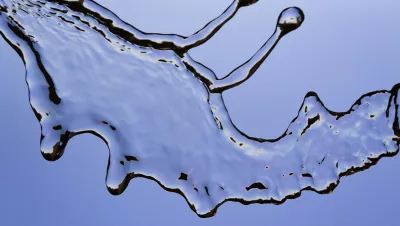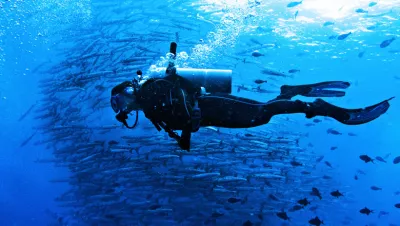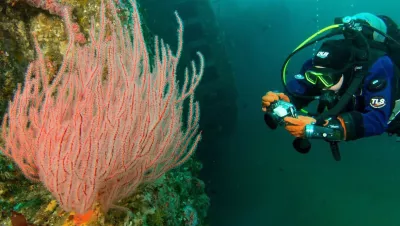
If you have been diving the same area with your camera for a long time, shooting the same animals and scenes again and again, sooner or later the question “What more is there?” might arise in your creative mind. It starts as a mild breeze and can end up a storm.
Feature articles in this issue with stand-alone pdfs
Human factors is about making it easier to do the right thing and harder to do the wrong thing. Therefore, for divemasters, human factors is about making it easier for them and their divers to do the right thing and harder to do the wrong thing.
Climate change is increasing the crisis of our seas, already under pressure due to several human activities. Rising temperatures are affecting and changing the underwater environment all over the world. The Mediterranean Sea, unfortunately, is no different from other seas. A group of specialists, coordinated by Greenpeace Italy, are monitoring the situation in the waters around Italy. Lorenzo Moscia reports.
Back in 1992, very little was known about Raja Ampat in the Indonesian province of what was then known as Irian Jaya. Edi Frommenwiler had heard rumours about how scenic it was, so he studied the area charts and suspected that with so many islands, there must be some great places to explore underwater. He decided to go there in September that year—a trip which would foster his appreciation for this amazing jewel of an area and build a liveaboard dive boat to explore it. Don Silcock interviewed the adventurer to learn more about his pioneering endeavours.
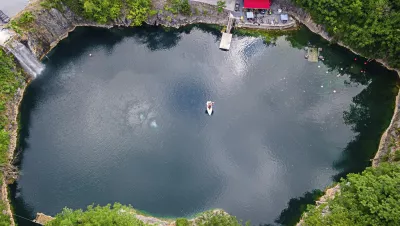
Avid diver and professor of computing Dr. Phil Pfeiffer gives an account of how the love of diving, persistence, US$100,000, and a homebrew aerator turned an abandoned quarry in the US state of Tennessee into a thriving dive site for a region that lacked one—and had lost prospective divers for want of a site.
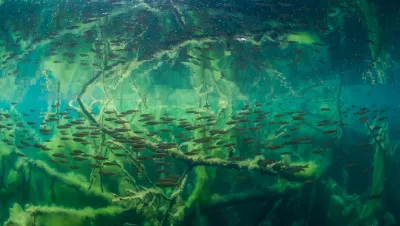
What is the origin of the unique lakes in the Volcanic Eifel region of Germany? In short, they were created from an explosion of water vapour when lava from a hot spot under the region met with groundwater thousands of years ago. The explosion created a round funnel, or crater, with earthen walls, which was later filled with rainwater. That is why the water is really clear and has rather good visibility. Author and underwater photographer Claudia Weber-Gebert gives us a glimpse into this beautiful underwater world and her new book about these special lakes.
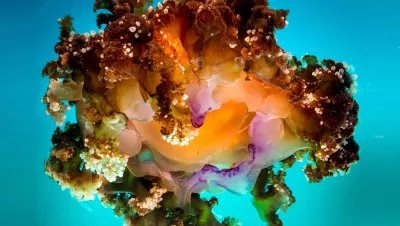
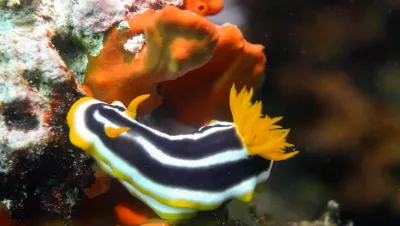
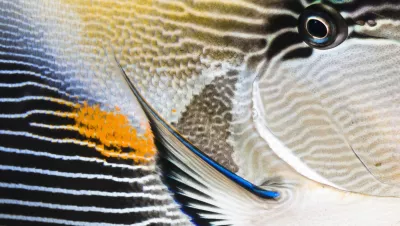
We asked our contributors what their favorite images of color contrasts were, and they sent back photos and stories revealing the diversity of color contrasts found under the waves. From brilliant sponges and corals against deep blue waters in Raja Ampat, Papua New Guinea, Bonaire and the Red Sea to contrasting primary colors of marine life in Socorro, Fiji and Cuba, from vivid hues of macro life in Indonesia, the Maldives and the Philippines to contrasting pinks and greens on wrecks in San Diego and New Jersey, X-Ray Mag contributors share their favorite images from near and far.
Pemba Island is part of the Zanzibar Archipelago in Tanzania. Pierre Constant shares his adventure there, which took him through lush emerald forests, home to the Zanzibar leopard and rare endemic species of monkeys, a reserve with Seychelles tortoise, as well as diverse dive sites with a delightful variety of corals and marine species, and ample opportunities for underwater photography.
Rico Besserdich is a widely published German artist, lecturer, photography instructor, writer, adjudicator and professional underwater photographer living in Turkey. His work has appeared in over 300 magazine and book publications around the world and has been translated into nine different languages. A CMAS/IAC Instructor Trainer with 5,000+ logged dives, he gives presentations at various photography-related events, universities and dive shows in Europe and has displayed his work in several fine art photography exhibitions.
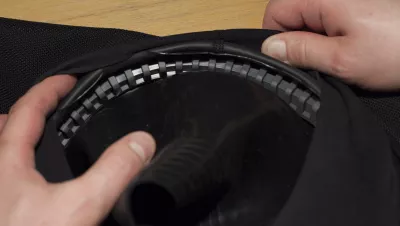
Lelle Malmström puts a drysuit neck seal through its paces by jumping of a 10m diving board to test if it holds tight.
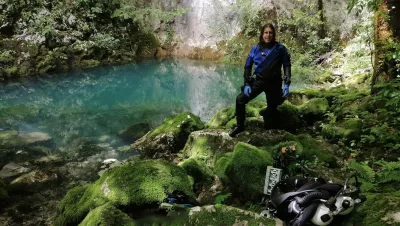
Freedom! That was the feeling I had in June 2020 when I left my home to go on a trip alone. Caves, abandoned mines, alpine lakes and a few wrecks were in my plan for a great adventure.
Stefano Carletti—adventurer, scuba diver, aviator and fisherman. He is a teller of sea tales and a searcher of hidden treasures on the seabed. He is a man who is a mirror of Europe, the “blue continent”—sometimes tempestuous, other times, crystal-clear and peaceful. Carletti’s life has been an extraordinary tailor-made adventure sewn by a life at sea, narrated by books and articles, which still fascinate audiences even today, as in the past. In this interview, Andrea Murdock Alpini gains more insight into the man behind the myth.
Readers of my Scuba books often say how useful they find the stories I tell to illustrate key messages. The stories are all true. I wish I could say I made them up, but I am not that creative. Fortunately, life tends to be able to conjure up real situations that are far more instructive than those I could ever invent.
Other news published in this issue
Soundscapes are a crucial measure of how well a reef is thriving.
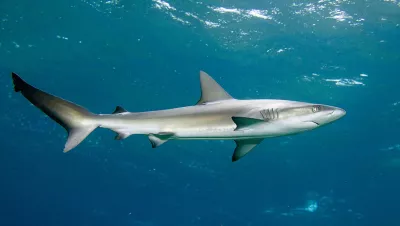
Passed during the last legislative session in the US state of Hawaii, Act 51 (House Bill 533) makes it illegal for anyone to knowingly capture, entangle, or kill any species of shark in Hawaiian waters.
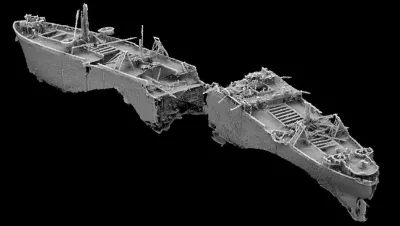
SS Richard Montgomery has been languishing at the bottom of the Thames Estuary in Kent for 77 years with a cargo of 1,400 tonnes of bombs in the forward holds. A team of bomb disposal experts have now been tasked with making the wreck safe.
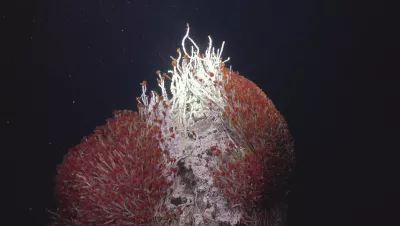
A multidisciplinary team of scientists from Mexico and the U.S. discovered new hydrothermal vents and six possible new animal species during a 33-day expedition off the coast of La Paz on Schmidt Ocean Institute’s research vessel Falkor.
Underwater photographers who bring their professional-grade camera equipment and housings into Mexico are at risk of being charged Mexican sales tax (19%) on the value of their personal equipment when passing through customs. The underlying policy is obscure, appears to be arbitrarily applied, and Cabo San Lucas, where the bulk of Mexican liveaboards berth, seems to be the most affected point of entry.
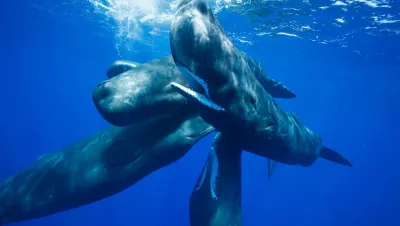
A team of researchers is using artificial intelligence focused on processing written and spoken human language to contextualize and translate the communication of sperm whales. The team hopes to be able to communicate with sperm whales in just five years.
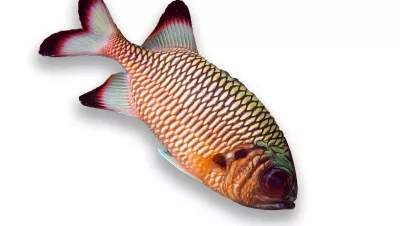
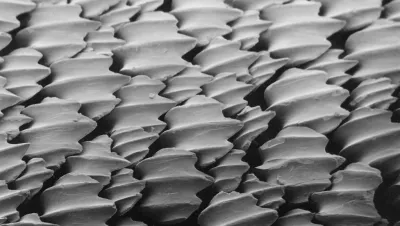
Fish have been spotted rubbing themselves against sharks. A recent study gives a possible reason for this behaviour.
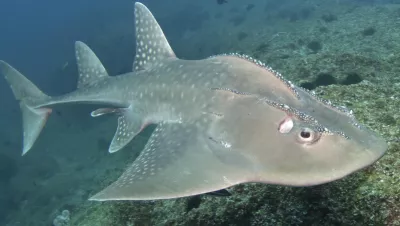
Scientists from the Marine Megafauna Foundation (MMF) have placed satellite tags on the bottlenose wedgefish and bowmouth guitarfish, two species of critically endangered wedgefish.
Divers visiting the artificial reef HMCS Yukon, which was sunk in 2000, are encouraged to photograph invertebrates that are attached to the vessel (such as anemones and sea fans), as well as any vertebrates (that is, fish) seen on their dives.