Scotland

The wreck of HMS Bayano
The wreck of HMS Bayano sits at 106m, with a minimum depth of 84m, lying bow NNW and stern SSE, with a 20-degree list to starboard. In places, the wreck rises over 15m above the seabed. Much of the vessel's superstructure is still in place.

Lost WWI Cruiser HMS Bayano Identified After 110 Years

After more than a century of mystery, technical divers from the community-led initiative, ProjectXplore, have conclusively identified the wreck of HMS Bayano, a First World War armed merchant cruiser sunk by the German submarine U-27 on 11 March 1915. The 126-metre vessel now rests at a depth of 106 metres in the North Channel, between Scotland and Northern Ireland.

The entire Imperial German Navy's High Seas Fleet of 74 ships had been assembled in the natural harbour at Scapa Flow in the Orkney Islands, following the cessation of hostilities on 11th November 1918.

Scotland Grants Added Protection of Historic Wrecks at Scapa Flow and Shetland

From 1 November 2025, Scotland’s underwater heritage gains new protections: the shipwrecks of Scapa Flow and the 1745 wreck of the Swedish East Indiaman Queen of Sweden are now designated Historic Marine Protected Areas. The move ensures these powerful symbols of maritime history remain preserved—and accessible—while defended against disturbance.

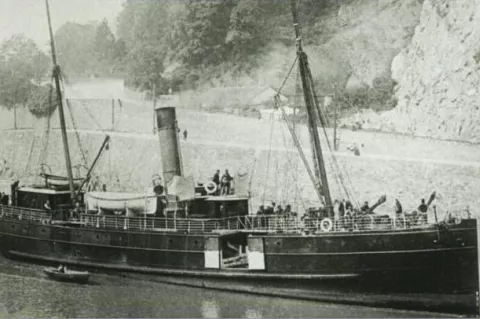
SS Cheltenham, later known as SS Topol, in a 20th-century photo by an unknown photographer. (Photo credit: © Sunderland Museums / Bridgeman Images / via press release)

WWI Shipwreck Found in North Sea Could Be SS Tobol

The SS Tobol was originally built as the SS Cheltenham in Sunderland in the early 20th century. The vessel featured a distinctive turret deck design and was operated by a British steamer company. In 1904, Russian warships seized the ship, and it was later transferred to the Russian Imperial Navy, where it was renamed SS Tobol after the Tobol River in Russia.

HMS Hawke, launched in 1891, was an Edgar-class protected cruiser.

Wreck of WWI Cruiser HMS Hawke Found in “Amazing” Condition

HMS Hawke was discovered earlier this week after an extensive search by Lost in Waters Deep—a group that searches for WWI shipwrecks—about 70 miles off the Aberdeenshire coast. It was found to be in "remarkable" condition, lying at a depth of around 110 metres (360ft).

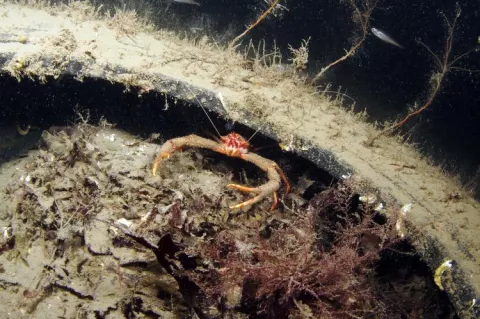
Scotland: Muck Diving at Home

Do we really need to go underwater at the other end of the world (and its challenges)? Lawson Wood poses this question while comparing the muck diving found in his home country of Scotland to that found in exotic locations in Asia and other regions of the world, renown for their muck diving sites.

SS Express sank off Orkney in 1918 under circumstances which has been a topic of debate for over a century

The SS Express: A Century-Old Mystery Resolved Off Orkney

A team of British divers have identified the wreck of the SS Express, a ship that sank off Orkney in 1918, resulting in the loss of 13 lives. The vessel, which had been a vital lifeline connecting Orkney to mainland Scotland, met its unfortunate end following a collision with another ship, the HMS Grenville.

Scapa Flow Wrecks: Multibeam Sonar Survey & 3D Photogrammetry

Photogrammetry of the mast of the Kronprinz Wilhelm wreck in Scapa Flow by 3DVisLab at the University of Dundee
The mast of the Kronprinz Wilhelm wreck, rendered in 3D photogrammetry by professors Chris Rowland and Kari Hyttinen of 3DVisLab at the University of Dundee in Scotland, United Kingdom

Scapa Flow, located in the Orkney Islands of Scotland, is the site of the scuttling of the High Seas Fleet of the Imperial German Navy in June 1919 at the end of World War I. While many of the wrecks were salvaged following the war, the remaining wrecks have become popular dive sites. In recent times, efforts to learn more about these wrecks through multibeam sonar surveys and 3D photogrammetry have taken place. Rosemary E.

Warner -v- Scapa Flow Charters Court Case: Successfully overturned

Scotland's highest civil court published their Opinion of the Court on 10 May 2022, and ruled that fault or neglect on the part of Scapa Charters "is not established".

The Opinion states "The Lord Ordinary wrongly concluded that walking in fins represented an unacceptable risk...The inference drawn by the Lord Ordinary was unreasonable. The divers' unchallenged evidence made it clear that putting on fins and then walking to the exit point was almost invariable practice.