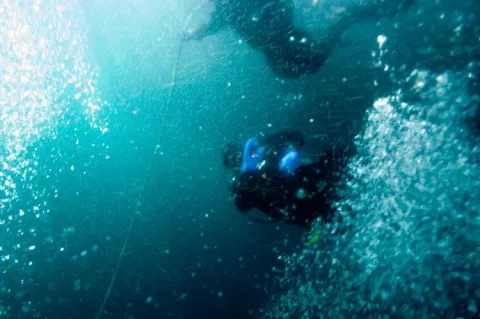
Safety Culture - diving in the zone
“Thank [beep] for that! How lucky were we? We better not do that again.
Don’t tell anyone though, we don’t want to look like amateurs...”

You must walk before you can run, so why do so few dive centres teach people how to swim before they learn to dive?
One of the things close to everyone’s thoughts is diver safety. We spend good money on quality dive gear and prudently have it frequently serviced and maintained, as this equipment will be sustaining our lives while underwater. But what about when we are on the surface? Just how many of us really do think about getting lost at sea?
The objective of the program is to build confidence, independence and self-esteem in the lives of children, adults and veterans with disabilities through the sport of scuba diving, scuba therapy and related activities.
The purpose of the program is to provide and support educational scuba diving programs with PADI courses—such as the PADI Seal Team, PADI Junior Open Water and the Open Water Diver course—that are open to any child, adult or veteran with a disability, with the hope of providing both physical and psychological therapeutic value to that person.
In 2006, a postgraduate program in maritime archaeology was established at the University of Southern Denmark. Based in Esbjerg, on the west coast of the Jutland Peninsula in southwestern Denmark, it is a one-of-a-kind university program in this centuries-old seafaring nation. The program is designed for students who want to pursue a professional career in maritime archaeology and heritage management.