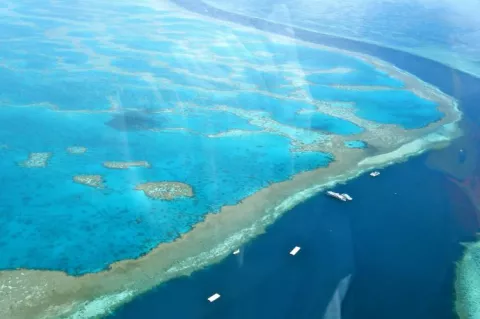
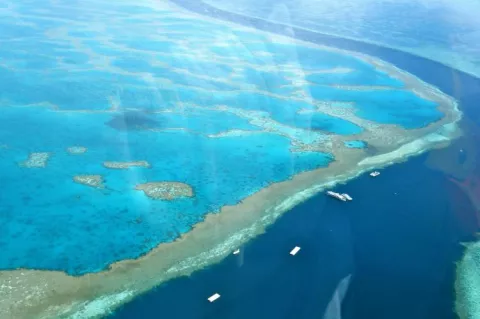
Amid mounting climate change concerns and looming El Niño summer, the iconic Great Barrier Reef narrowly dodges a World Heritage status downgrade from UNESCO, underscoring the urgency for intensified global conservation efforts.
Australia's Great Barrier Reef, a UNESCO World Heritage site since 1981, narrowly avoided a downgrade to the "in danger" status during a recent meeting of the World Heritage Committee. The decision was made despite the repeated warnings by experts about the escalating impact of climate change on the world's largest coral reef system.
Researchers have discovered bacteria closely related to chlamydia, a sexually transmitted infection in humans, on the Great Barrier Reef, which may assist coral tackle the problem of coral bleaching.
The discovery of chlamydia-like bacteria in corals of the Great Barrier Reef could help scientists understand the coral microbiome and its impact on coral reef health.
Corals are associated with a variety of bacteria, which occur in the surface mucus layer, gastrovascular cavity, skeleton and tissues where they play a critical role in protecting corals against pathogens, cycling nutrients, and producing vitamins and essential amino acids.
Some tissue-associated bacteria form clusters, termed cell-associated microbial aggregates (CAMAs), which are poorly studied.
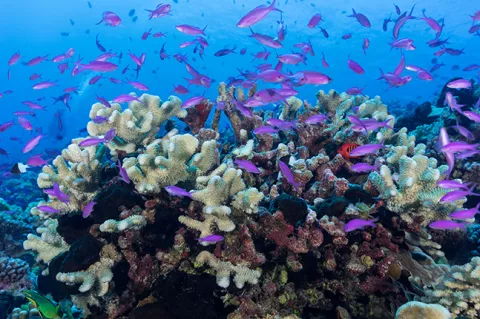
Rare piece of good news: The northern and central Great Barrier Reef have recorded their highest amount of coral cover since the Australian Institute of Marine Science (AIMS) began monitoring 36 years ago.
The increasing frequency of warming ocean temperatures and the extent of mass bleaching events highlights the critical threat climate change poses to all reefs, particularly while crown-of-thorns starfish outbreaks and tropical cyclones are also occurring. Future disturbance can reverse the observed recovery in a short amount of time.
Prime Minister Scott Morrison is set to announce AUS $1 billion will go towards improving water quality, reef management and research for the Great Barrier Reef today in Cairns, but draws renewed climate criticism.
Prime Minister Scott Morrison unveiled the nearly decade-long conservation package days ahead of a February 1 deadline set by UNESCO to submit a report on the reef's state of conservation, and months after it narrowly avoided being placed on the UN's cultural agency's "danger" list due to the threat of climate change.
“Any additional funding for the environment in Australia is welcome, as it is severely under-resourced. However, handing out cash for the Great Barrier Reef with one hand, while funding the very industry – fossil fuels – that’s driving devastating climate impacts like marine heatwaves and coral bleaching, means they are adding to the very problem they are claiming they want to fix.”
— Climate Councillor, climate scientist and Distinguished Professor of Biology at Macquarie University, Professor Lesley Hughes
Researchers in Australia have uncovered a massive “detached” coral reef off the Queensland coast, the first of its kind to be discovered in more than 120 years. The discovery was made about 80 kilometres east of Cape Grenville, approximately 150 kilometres south of the tip of the Cape York Peninsula.
A giant sea snail may turn out to be another line of defense against the destructive crown-of-thorn starfish that is currently plaguing Australia’s Great Barrier Reef.
Called the Pacific triton sea snail (Charonia tritonis), it can grow up to about 50 to 60cm and is indigenous to Australian waters. More importantly, the crown-of-thorn starfish happens to be part of its natural diet. However, the sea snail is currently endangered due to the consumer demand for their shells.
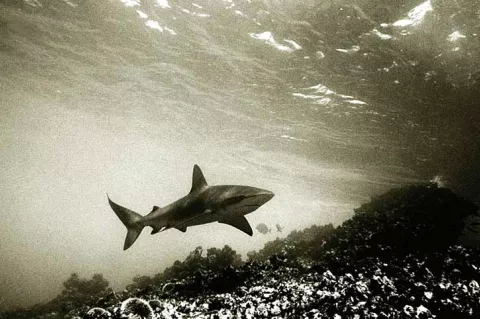
The present study examined shark distribution patterns, species-habitat associations, and marine reserve use with baited remote underwater video stations (BRUVS) along the entire Great Barrier Reef Marine Park (GBRMP) over a ten-year period.
Overall, researchers recorded 21 different shark species. The relative abundance of sharks was significantly higher in non-fished sites in the GBR Marine Park no-fishing zones relative to fished sites.