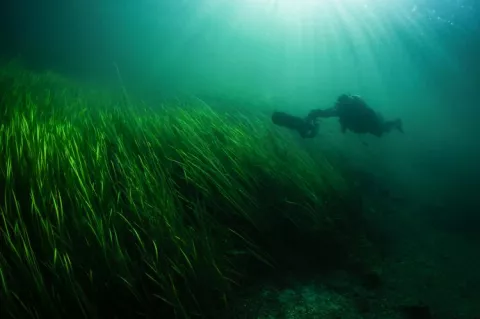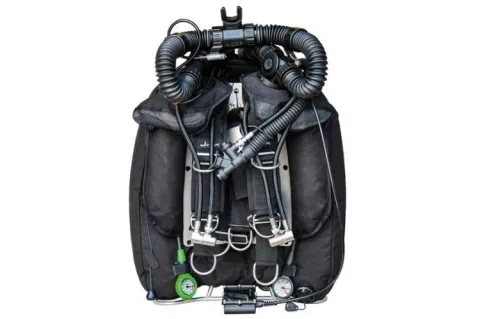
More than twenty years after a conversation with a Norwegian diving friend first sparked the idea, German technical diver and underwater photographer Steffen Schmitt made the trek north to explore the mysterious depths of Norway’s Trondheim Fjord.
It was late evening when I rolled onto the ferry in Frederikshavn, Denmark. The hum of the engines and the salty breeze signalled the start of a long-awaited expedition. As the ferry glided towards Gothenburg, Sweden, I sank into my reclining chair, my mind drifting back to a conversation with a Norwegian diving friend over two decades ago. His tales of the fjords had sparked a dream, and now, I was chasing it.
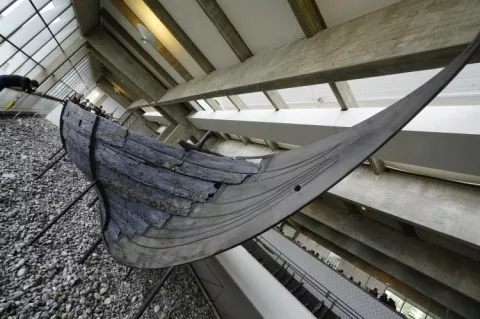
Trading and transport by sea goes back to prehistoric times. Stone Age settlements and canoes, Viking ships, medieval cogs, fluyts, tall ships, warships, defence systems, jetties, harbour installations and aircraft wrecks—Denmark has got it all.
Archaeology is concerned with the excavation, surveying and protection of historical artefacts, both on land and under the sea. The findings provide an important key to our understanding of shipbuilding traditions, trade and life in the past, and political and military confrontations.
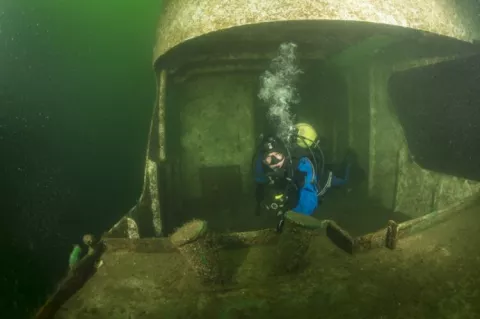
M/F Ærøsund is a former ferry that served the islands in the South Funen archipelago. It was scuttled in 2014 in a sheltered bay just 550m off Funen’s southern coastline where it now rests at a depth of only 19m. It is easily visible from the surface.
I remember attending the sinking, which was a much-hyped media event. News helicopters were whizzing about like giant wasps and an armada of leisure crafts encircled the ferry, which was anchored in its designated sinking spot, awaiting the scuttling. We were far out in the countryside and had to go down many small winding side roads to make it to a camping ground in the south-eastern corner of the island of Funen (or “Fyn,” in Danish)—a short distance west of the lovely town of Svendborg.
Approximately right in the centre of Jutland, the western peninsular part of the realm, there is a region called Søhøjlandet, which translates to “The Lake Highland.” It is a sparsely populated and largely forested area with many lakes, a large part of which make up a reserve.
Denoting it as a highland is a bit of an embellishment, causing some Scandinavian brethren in Norway and Sweden, who have real mountains in their outback, to scoff. Afterall, the highest “peaks” are only about 150m above sea level. However, in Denmark, which is otherwise largely flat and predominately farmland, it stands out—and for good reason. It is picturesque!
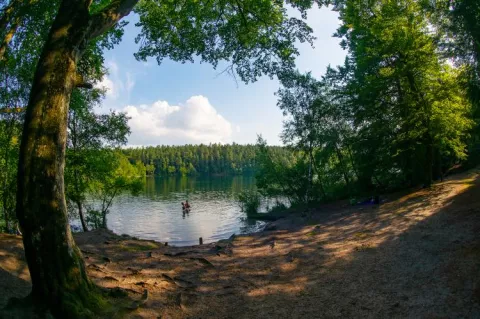
Generously scattered among rolling hills, which are draped in forest or heath, are plenty of freshwater lakes and they are among the cleanest and clearest in the country.
Diving in Denmark, how does it really measure up? Since Morten Bjørn Larsen lives in Copenhagen, he talks about his favorite dives in and around the island of Zealand, where the capital city is located. Several wrecks in Øresund and a bridge in Isefjord top the list.
As one of my good friends and diving partners usually says: We are lucky with a lot of things living here in Denmark, but if you like cycling in the mountains, skiing or diving in warm waters... then you are not super well-placed as a Dane. I myself usually see my dives in Denmark as training, understood in terms that if you can complete a wreck dive in Øresund and come up with a useful picture or two and a big smile on your face, then you are as well prepared as you can be to dive the rest of the world.
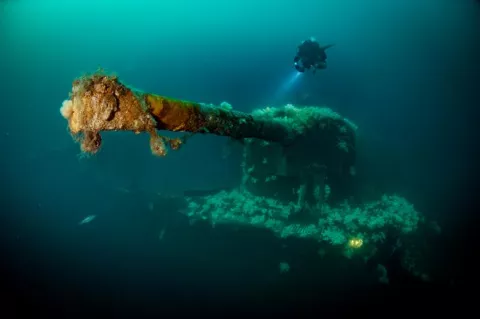
The seas around Denmark have seen thousands of shipwrecks from ancient times until today. We take a look at a selection of wrecks from WWII minesweepers to WWI Battle of Jutland armoured cruisers to Age of Sail vessels with cannons.
The Battle of Jutland was the largest surface naval battle ever, in terms of displacement, and the only full-scale clash of battleships during the First World War. Britain suffered more casualties and lost more ships than Germany, but the outcome was a strategic success for the British since it resulted in the successful containment of the German Imperial Navy’s High Seas Fleet. Of the 249 ships that fought in the Battle of Jutland, 25 were sunk.
The Baltic Sea offers some very treacherous waters even under the best of circumstances. The price to pay for sailing the Baltic through the millenniums has been high, and traces of those costs are scattered over the bottom.
The value is not measured in money, but in knowledge. Due to extremely favorable conditions, the wrecks and the remains found are virtual time capsules, waiting to tell their stories about people and their way of living in the past, about the countries and the cultures of Europe.
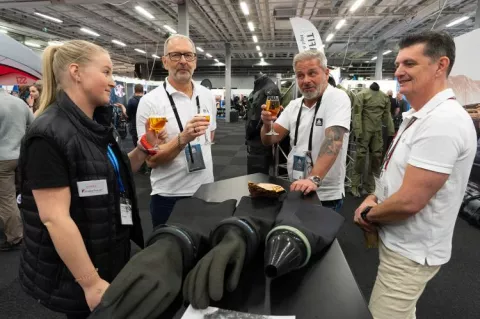
Together with the Swedish Fair in Gothenburg and the Boat Show, attracting 20,000 visitors over the weekend, the Scandinavian Dive Show will now return to the Swedish West Coast, the diving hub of Sweden.
Notably, Gothenburg is strategically positioned a few hours' drive by road or train from both Copenhagen and Oslo, making it accessible for the Danish and Norwegian markets. Additionally, it is a quick ferry ride away from Jutland.
At the Swedish Exhibition, everything is under one roof. Within the neighbouring Gothia Towers, you have several excellent restaurants to choose from. Swedish Exhibition also offers prime accommodation options for exhibitors, with nearby 4- and 5-star hotels for you or your long-distance business contacts to stay.
It was a relief to see the crowds entering the Scandinavian Dive Show on the morning of Saturday, 10 February. Tommy Jarnbrink, the founder and principal organiser, alongside the X-Ray Mag team, worked tirelessly to organise and promote the expo to both local and international networks, aiming to attract new attendees. Following the 2023 edition, it became apparent that a new format was essential for the show's future.
Contact organiser Tommy Jarnbrink for further information about next year's Scandinavian Dive Show.
Video file
Try dives were offered in the pool which was set up at the junction between the boat show halls a
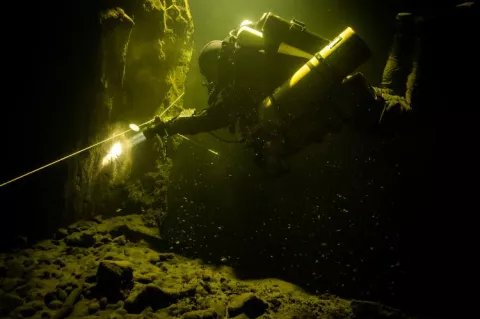
The desire for adventure lies in wait and entices us… On Utö, there was an unexplored mine system. Follow Anders Etander down into the darkness, where the “In Water Under Land” exploration group had the privilege of diving in a place that has been untouched for 150 years.
Our journey through life is amazing, and it is strange how one thing can lead to another. Ever since we got our basic certificate in mine diving, my closest dive friends and I had talked about the existence of mines on Utö Island in the Stockholm archipelago.