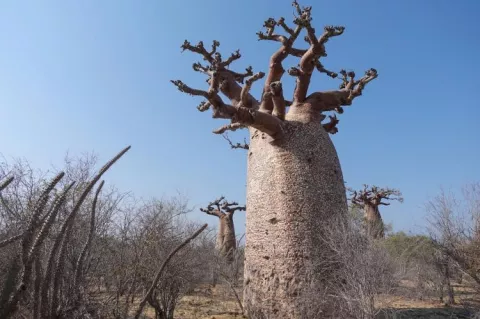
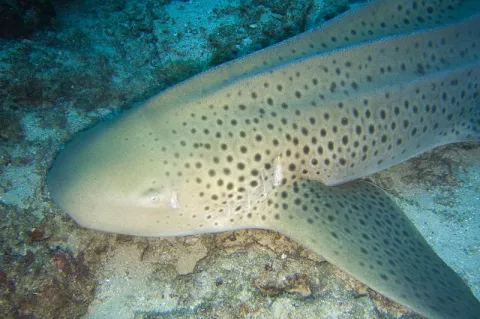
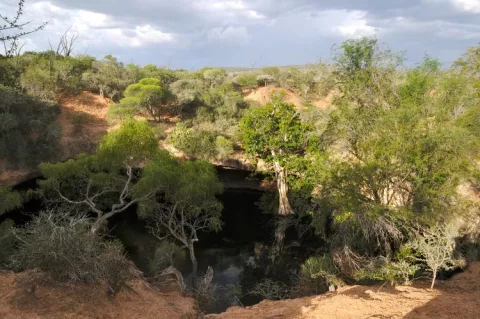
This is a story about a “cave man” in paradise. OK, you smile, that is a good start, as this tale will certainly whet your appetite. Pierre Constant shares his adventure diving the caves of the Mikea Forest in South Madagascar.
My compulsive relationship to Madagascar has been a steady affair of the heart for the past 30 years. In 2012, curiosity brought me to explore the sinkholes of the Great South. I devoted my time to investigating various sites on the Mahafaly Plateau to the south of Tulear. From my experience of cave diving in South Australia, I understood that caves and sinkholes, connected to underground rivers, were a source of unexpected finds—such as fossils of extinct prehistoric animals.
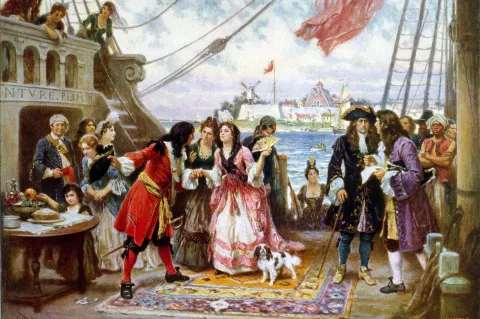
Captain Kidd was executed in 1701 for piracy after returning from a voyage to the Indian Ocean. Legend had it that Kidd hid much of his loot, which has prompted numerous treasure hunts around the world and inspired Robert Louis Stevenson when he wrote Treasure Island.
The Madagascar government has established its first shark sanctuary in an area celebrated for marine biodiversity. According to the Wildlife Conservation Society (WCS), the new marine protections apply to Antongil Bay, located in northwestern Madagascar and renowned for its coral reefs and seasonal humpback whale population.
Stretching west and north of the Isalo Ranges, the Mahafaly Plateau runs like a dragon’s tongue to the very tip of Madagascar’s southwest coast. This is a remote country in the Great South, where numerous historical shipwrecks have lain below the waves since the 16th century.
The Mahafaly Plateau has been affected by post-Eocene tectonic movements with a northwest-southeast distension, which tops an older tectonic event on the underlying substrate. Seismic activity is a common occurrence there. The karst process is intense in the lower Eocene with very deep caving systems, whereas in the mid-Eocene, sinkholes are only visible.