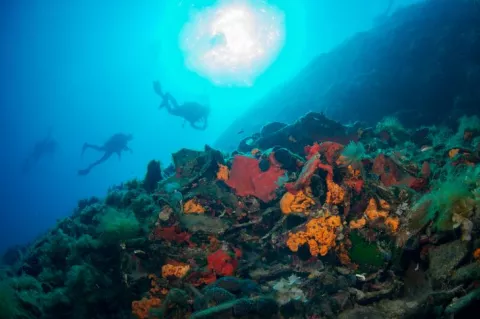
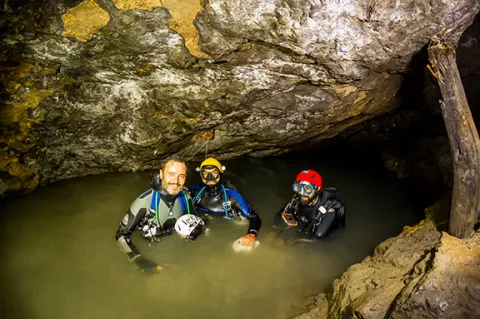
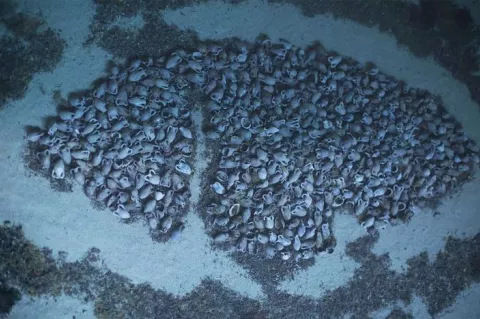
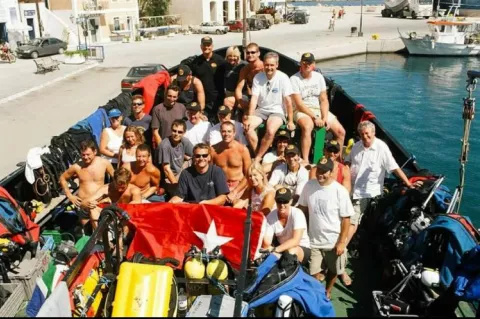
In a historic mission, professional deep-sea divers have retrieved a collection of artefacts from the wreck of HMHS Britannic, which sank after striking a mine in 1916 off the Greek island of Kea. The items, recovered from a depth exceeding 120 metres, offer new physical insight into the life and service of the ship and its passengers. The operation marks the first time objects have been brought up directly from the wreck site.
Greece has announced plans to create two expansive national marine parks—one in the Aegean Sea and another in the Ionian Sea—signalling a significant step forward in its environmental protection strategy. The move is part of the country's efforts to meet international biodiversity targets by 2030 and will expand Greece’s marine protected areas from 22% to 30% of its territorial waters.
Greece has enacted its first-ever legal framework to protect deep-sea coral ecosystems in the Aegean Sea. This initiative targets vulnerable coral habitats at depths beyond 50 metres, aiming to prevent damage from fishing gear and other human activities.
In the crowded " Dimitrios Pandermalis" amphitheater of the New Acropolis Museum, the conference and press conference of the " Korseai" Institute of Historical and Archaeological Research concluded on May 15, 2025, attended by journalists, politicians, and municipal representatives.
The wreck of the HMS Trooper, a British submarine lost during World War II, has been located in the Icarian Sea, nearly 81 years since the submarine was presumed lost.
The wreck of the HMS Trooper has finally been found by the private deep-sea research company Planet Blue at a depth of 253 metres (830 ft) in the Icarian Sea, near the Cyclades Islands. The team was led by Greek diver and researcher Kostas Thoktaridis.
Greek wreck researcher Kostas Thoktaridis and his team have uncovered the wreck of the SS Arcadian, which sank in 1917 after being torpedoed by a German U-boat.
The Arcadian, built initially as the RMS Ortona in 1899 and later converted into a troopship during World War I, was en route from Salonika to Alexandria, transporting soldiers and medical personnel, when it was attacked on 15 April, 1917 and sunk by the German U-boat SM UC-74, resulting in the tragic loss of 279 lives.
The Arcadian had just completed a boat drill when a single torpedo hit it between the bridge and the foremast and sank within six minutes. 1,058 people were rescued
In a significant environmental move, Greece has announced plans to invest €780 million in the creation and maintenance of marine parks across the country. These initiatives aim to protect marine biodiversity and make Greece a leader in marine conservation in Europe, including a ground-breaking ban on bottom trawling in all marine protected areas.
The British submarine HMS Triumph, which disappeared without a trace in 1942, has finally been discovered on the bed of the Aegean Sea by Greek researcher Kostas Thoktaridis and his team.
Kostas Thoctarides told state news agency ANA his team had located the wreck of HMS Triumph at a depth of 670 feet at an undisclosed location in the Aegean Sea.
The HMS Triumph was a British T-Class submarine involved in military operations in the Aegean Sea and elsewhere in the European theatre of the Second World War. It carried out twenty missions, including attacks against Axis ships, landing British commandos and rescuing Allied soldiers, until it disappeared during a mission in 1942. Eighty-four submariners were killed when the HMS Triumph sank.
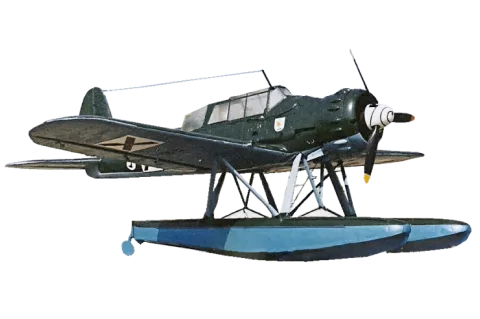
Greece has lifted diving restrictions eliminating depth limits and allowing diving at archaeological sites and sunken ships without an escort. The move follows a passed 2019 bill easing scuba diving laws and is part of a larger group of incentives to encourage the return of international tourists following the worldwide coronavirus pandemic.