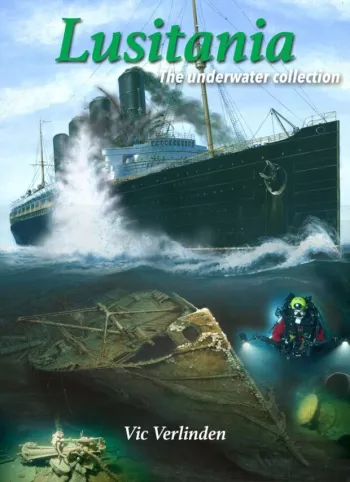
X-Ray Mag contributor, wreck diver and underwater photographer Vic Verlinden and his team conducted "Lusitania—Project 17," a five-year thorough study documenting and photographing the wreck. His efforts over five expeditions have resulted in this hardcover book, telling the story of this illustrious vessel.
On 7 May 1915, the transatlantic liner RMS Lusitania was sank by a German submarine. This incident, in which 128 Americans lost their lives, prompted an outcry from America, and was one of the reasons for its entry into World War I two years later.
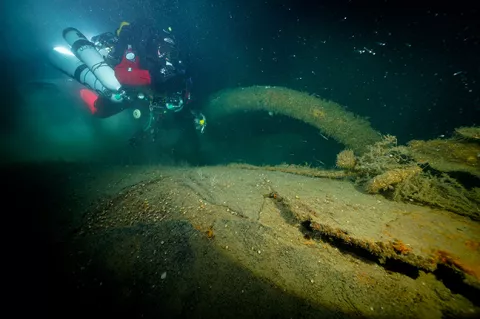
Today, the Lusitania wreck is 19 km from the southern coast of Ireland, resting at a depth of 92m in tidal waters with a visibility of about six metres.
After the Titanic, the RMS Lusitania is probably one of the wrecks in the world which most captures the imagination. It was therefore a great and challenging endeavor for me to be able to see this wreck with my own eyes.
Despite warnings from the German embassy in the American press not to start the crossing with the Lusitania, the ship was brought under steam on 1 May 1915. On board were 1,257 passengers and 702 crew members. The command was in the hands of Captain William Thomas Turner. The passengers on the Lusitania did not worry too much because it was assumed that the Germans would not dare torpedo a ship with so many American civilians on board.