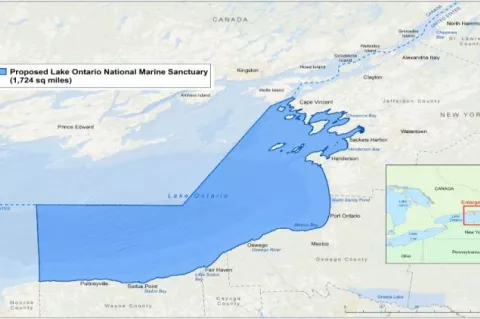
Lake Ontario Becomes a National Marine Sanctuary

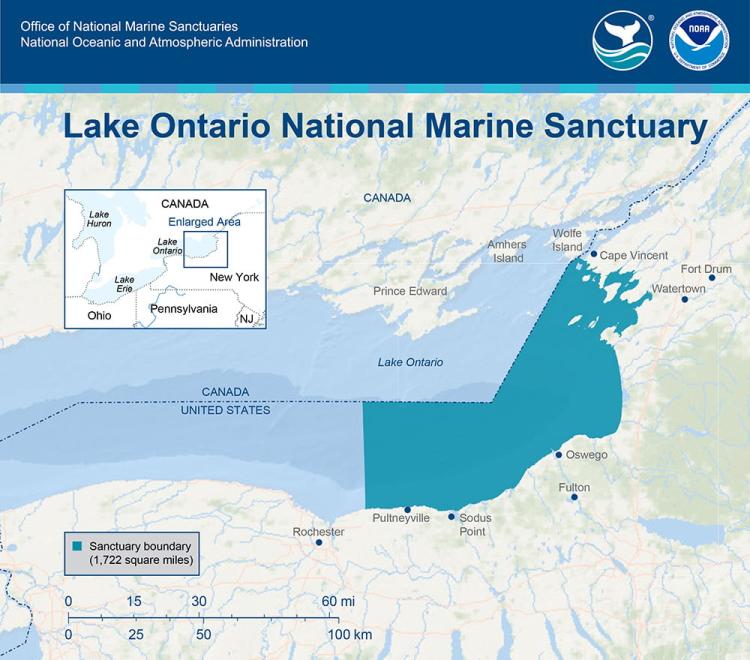
What does this new designation mean for the Lake Ontario community, New York State, and all those who care about protecting our nation’s most iconic waters? It will:

What does this new designation mean for the Lake Ontario community, New York State, and all those who care about protecting our nation’s most iconic waters? It will:

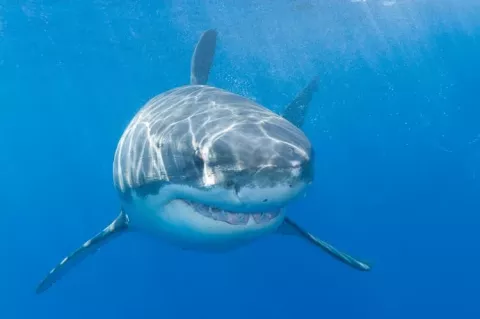
The study, spanning 66 marine reserves across 37 countries worldwide, sheds light on the stark contrast in shark abundance between fully protected zones and areas open to industrial fishing. Reef-dwelling species such as Caribbean reef, grey reef, whitetip reef, and nurse sharks exhibited nearly double the population density within fully protected marine reserves compared to fishing-permitted zones.

The findings from UC Santa Barbara’s Marine Science Institute provide compelling evidence of Marine Protected Areas (MPAs) value to the scuba diving industry and local economies. As global leaders aim to protect 30% of land and water by 2030, understanding the diverse benefits of MPAs is crucial for informed decision-making and sustainable coastal management.
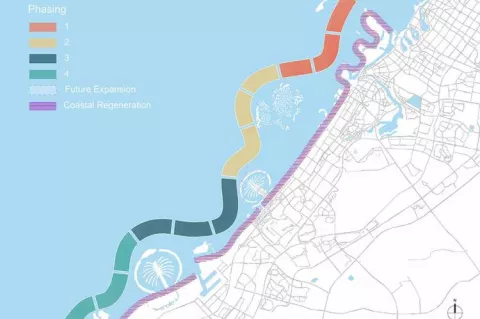
The project, which is currently only in the research and development stage, will consist of a series of interconnected islands that will host humans in luxury eco-lodges, surrounded by millions of mangrove trees.
'The 'floating living lab', dubbed Dubai Reefs also aims to create an artificial reef ecosystem below the islands, spanning approximately 200 square kilometres, that will provide a home for one billion corals, as well as turtles, fish and other marine life along the Dubai coastline.

At the start of the event, US White House climate envoy and former secretary of state John Kerry said that the meeting was “so incredibly important because it is a conference that is focused on action, not on talk. It’s about real commitments and real solutions.”
Nearly $6 billion in US commitments spread across 77 projects to protect the high seas in 2023 was announced by Kerry, including technical cooperation to foster “green shipping corridors.”
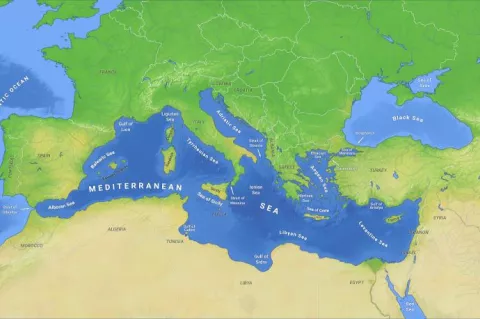
“An agreement is being finalized with France, Spain and Cyprus for a large protected area in the extra-territorial waters of the Mediterranean, which is a great contribution to the 30×30 goal,” said Gilberto Pichetto Fratin, the Italian environment and energy security minister at the Valore Natura conference in January 2023.
The legal framework provides a crucial mechanism in setting up vast marine protected areas (MPAs) in the high seas. The historic treaty plays a critical role in the enforcement of the 30x30 pledge that countries had made in December 2022 at the United Nations Biodiversity Conference (COP15) in Montreal, Canada. The 30x30 target aims to protect a third of the sea (and land) by 2030.
The announcement by conference president, Rena Lee of Singapore, was met by a standing ovation from delegates, who had worked long days and nights to finalize the deal.
NOAA invites the public to comment on this proposed rulemaking and will consider all submitted comments when preparing final regulations in the last phase of the sanctuary designation process.
The public comment period is open until March 20, 2023.
The national significance of the area within and around the proposed sanctuary will benefit from long-term protection, management and interpretation.
This action expands on the 2022 closure of the Guadalupe Island Biosphere Reserve by the National Commission of Natural Protected Areas (CONANP), the federal agency tasked with managing Mexico’s protected natural areas.
They also closed the island to cage diving in 2021 and the pandemic closed down operations in 2020.
Fifty years ago, the United States Congress, prompted by the Santa Barbara oil spill off the coast of California, three years earlier, passed the Marine Protection, Research and Sanctuaries Act which allowed for the creation of marine sanctuaries. Since October 1972, the National Marine Sanctuary System has grown into a nationwide network of 15 national marine sanctuaries and two marine national monuments that conserve more than 620,000 square miles of ocean and great lakes waters.