  • Sportsdykkeren.dk 🇩🇰
  • XRay-Mag.SE 🇸🇪
  • Dykmässan (diveshow)

Secondary menu - Advertising and subscriptions

  • Got stories? - Guidelines
  • Advertising
  • Subscribe to X-Ray Mag
Home
  • Magazine
  • News
      1. Latest news
      2. Press releases
      3. Breaking News
  • Travel
      1. Destinations
        1. Australia & New Zealand
        2. Continental Asia
          • Japan
          • China
          • South Korea
        3. Southeast Asia
          • Indonesia
            • Bali
            • Komodo
            • Lembeh
            • Maluku
            • Raja Ampat
            • Sulawesi
          • Malaysia
          • Papua New Guinea
          • Philippines
          • Thailand
          • Timor-Leste
        4. South Pacific & Oceania
          • Fiji
          • French Polynesia
          • Micronesia
            • Chuuk (Truk)
            • Marshall Islands
            • Yap
          • Palau
          • Samoa
          • Solomon Islands
          • Tonga
          • Vanuatu
        5. Indian Ocean
          • Madagascar
          • Maldives
          • Seychelles
        6. Red Sea
        7. Africa
          • Egypt
          • Malawi
          • Mozambique
          • Namibia
          • South Africa
          • Sudan
          • Tanzania
        8. Mediterranean & Adriatic
          • Croatia
          • Cyprus
          • France
          • Greece
          • Italy
          • Malta & Gozo
          • Portugal
          • Spain
          • Turkey
        9. Europe
          • Northern Europe
            • Denmark
            • England
            • Finland
            • Iceland
            • Ireland
            • Norway
            • Scotland
            • Sweden
          • Eastern Europe
            • Albania
            • Bosnia-Hercegovina
            • Croatia
            • Czech Republic
            • Hungary
            • Poland
            • Russia
              • Northwest Russia
              • Russian Far East
              • Siberia
          • Western Europe
            • Austria
            • France
            • Germany
            • Switzerland
          • Southern Europe
            • Cyprus
            • Greece
            • Italy
            • Malta & Gozo
            • Portugal
            • Spain
        10. Atlantic
          • Azores
          • Canary Islands
          • Falkland Islands
          • St Helena
        11. North America
          • Canada
          • Great Lakes
          • United States
            • East Coast
            • West coast
            • Alaska
            • Hawaii
            • US Virgin Islands
            • Guam
          • Mexico
        12. Caribbean & Central America
          • Bahamas
          • Belize
          • Cayman Islands
          • Bonaire
          • Cuba
          • Dominican Republic
          • Mexico
          • Columbia
          • Grenada
          • Costa Rica
          • Saba
          • Honduras
          • Turks & Caicos
          • US Virgin Islands
          • Nicaragua
        13. South America
          • Argentina
          • Brazil
          • Ecuador
        14. Polar Regions
          • Artic
          • Antarctica
      2. Promotions
      3. My Favorite Dive
  • Ecology
      1. Ocean Mysteries series by Ila France Porcher
      2. Sharks, Rays and Nudibranch stories by Andy Murch
      3. Sentience
      4. Conservation
      5. Coral Reefs
      6. Dolphins
      7. Fish
      8. Jellyfish
      9. Mantas & Stingrays
      10. Nudibranchs
      11. Octopus & Squid
      12. Sea Turtles
      13. Seals & Sea Lions
      14. Sharks
      15. Whales
  • Wrecks
      1. Vic Verlinden
      2. Ancient Wrecks
      3. Artificial Reefs
      4. Marine Archaeology
      5. Older Warships
      6. Steamships & Cargo
      7. Tall & Wooden Ships
      8. WWI Wrecks
      9. WWII Wrecks
  • Training & Tech
      1. Rebreathers
      2. Sidemount
      3. Deep Wrecks
      4. Cave Diving & Mines
      5. Ice Diving
      6. Diver Health & Safety
        1. Divers Alert Network - DAN
        2. Safety Culture
      7. Adaptive Diving
  • More
      1. Equipment
        1. BCDs, Wings & Sidemounts
        2. Dive Computers
        3. Dive Watches
        4. Drysuits & Undergarments
        5. Hoods, Gloves & Boots
        6. Lamps & Torches
        7. Masks, Fins & Snorkels
        8. Regulators
        9. Wetsuits & Rashguards
      2. Photo & Video
        1. Equipment
          • Cameras & Optics
          • Editing & Post-processing
          • Housings
          • Lighting
          • Useful Tools
        2. Tutorials
          • Techniques & Tips
            • Mike Bartick
            • Rico Besserdich
          • Composition
          • Editing & Post-processing
        3. News & Announcements
        4. Contributors' Picks
      3. Books & Media
        1. Works by our contributors
      4. Profiles & Interviews
        1. In Memoriam
      5. Lifestyle
        1. Portfolios & Ocean Arts
        2. Apres Dive & Apparel
        3. Editorials
      6. Contributors
        1. Pundits
          • Mike Ange
          • Gareth Lock
          • Michael Menduno
          • Mark Powell
          • Simon Pridmore
        2. Regular writers
          • Scott Bennett
          • Andrey Bizyukin
          • Larry Cohen & Olga Torrey
          • Pierre Constant
          • Brent Durand
          • Jennifer Idol
          • Scott Johnson
          • Steve Jones
          • Kate Jonker
          • Kelly LaClaire & Kate Holt
          • Matthew Meier
          • Brandi Mueller
          • Svetlana Murashkina
          • Barb Roy
          • Don Silcock
          • Claudia Weber-Gebert
          • Lawson Wood
        3. Columnists
          • Scott Bennett
          • Rico Besserdich
          • Rosemary 'Roz' E. Lunn
          • Ila France Porcher
  • âš² Search

A Shark in the Coldest Sea on Earth

For decades, divers and scientists alike believed that sharks roamed every ocean on Earth—except one. The icy waters of Antarctica were thought to be simply too cold, too extreme, for any shark to survive. But the ocean, as it so often does, has revealed yet another surprise.

Sleeper Shark Illustration
Ecology & Science

In January 2025, researchers from the Minderoo-UWA Deep-Sea Research Centre captured extraordinary footage: a large sleeper shark gliding silently past a deep-sea camera in Antarctic waters. The sighting took place near the South Shetland Islands, at a depth of around 500m, in water hovering near freezing.

Even for seasoned scientists, the moment was startling. As marine researcher Alan Jamieson later admitted, seeing a shark there felt almost impossible. Until now, no sleeper shark had ever been recorded in these southernmost seas.

Weddell Seals Time Their Hunts Strategically

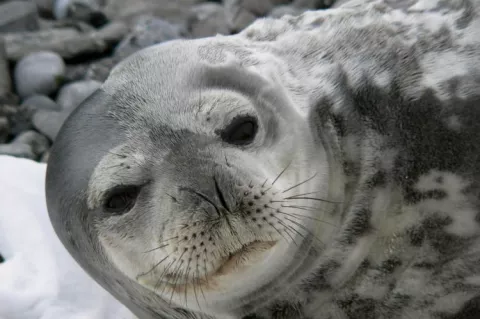
Research reveals that Weddell seals in Antarctica dive deep and time it right, adopting a calculated hunting strategy that maximises overall results.

Ecology & Science

New research from the Woods Hole Oceanographic Institution (WHOI) and partners reveals that Weddell seals that inhabit the icy waters of Erebus Bay, Antarctica, employ a careful hunting strategy when it comes to diving, timing their dives to balance energy use and foraging efficiency.

The study, published in Communications Biology, shows that the seals perform their longest and deepest dives early in the day, and not during midday when sunlight is at its peak. 

Antarctic Wildlife Threatened by Lingering Hole in Ozone Layer

In recent years, the hole in the ozone layer over the Antarctic has persisted all the way to December, thereby exposing the local wildlife and emerging vegetation to the sun's ultraviolet rays.

Ecology & Science

The ozone layer is back on our radar. Although its condition has improved after the Montreal Protocol was implemented, the hole reappears every spring over the Antarctic. 

In recent years, it is no longer just a winter phenomenon anymore; it Is stretching into the early summer, coinciding with crucial times in the life cycles of local wildlife and emerging vegetation, exposing them to the sun's ultraviolet rays. As our planet changes, the timing of this exposure could have profound effects on the delicate ecosystems of the Antarctic.
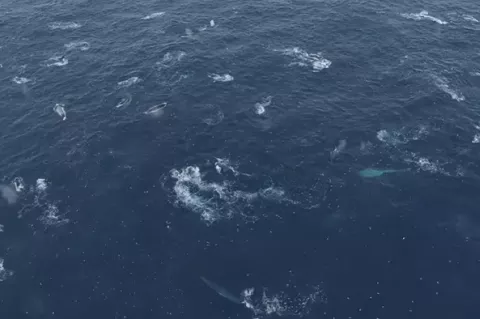

Groups of fin whales spotted in Antarctic, suggesting recovery after whaling

Scientists have seen fin whales in massive numbers feeding near their ancestral hunting grounds of Elephant Island in the Antarctic.

Fin whale feeding aggregation.
Ecology & Science

Fin whales (Balaenoptera physalus quoyi) of the Southern Hemisphere were brought to near extinction by 20th-century industrial whaling. For decades, they had all but disappeared from previously highly frequented feeding grounds in Antarctic waters. Researchers estimate that by the time whaling was banned in the 1970s over 700,000 fin whales had been killed.  

Video file

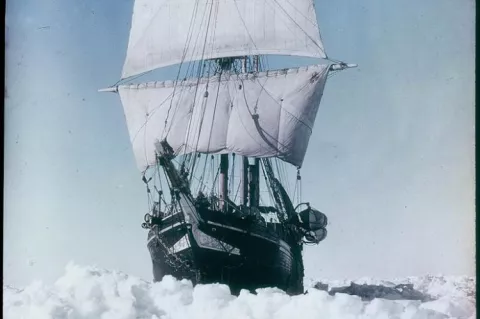
Shackleton's Endurance found

The Endurance22 Expedition has located the wreck of Endurance, Sir Ernest Shackleton's ship which has not been seen since it was crushed by the ice and sank in the Weddell Sea in 1915.

Endurance was crushed by the sea-ice and sank in 3,000m of water
Wrecks & Archaeology

What remains of the Endurance is 3,000m down in waters that are pretty much permanently covered in thick sea-ice, the same sea-ice that trapped and then ruptured the hull of Shackleton's polar yacht.

World's largest fish breeding area discovered in Antarctica

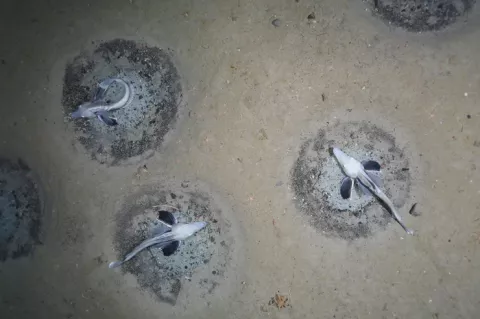
Researchers on board the research vessel estimated that the area contained 60 million nests of the Jonah's icefish—likely the most spatially extensive contiguous fish breeding colony discovered to date.

Some of the nests that were discovered
Ecology & Science

Using a towed camera system, researchers discovered the world’s largest fish breeding area near the Filchner Ice Shelf, south of the Antarctic Weddell Sea.

The nests belonged to the Jonah’s icefish (Neopagetopsis ionah). Mapping the area suggested a total extent of 240 square kilometres. Based on the density of the nests and the size of the breeding area, it was estimated that there were about 60 million nests.

Ships may introduce invasive species to Antarctica

A study shows that invasive, non-native species may find their way into Antarctica on ships travelling to the region for various purposes.

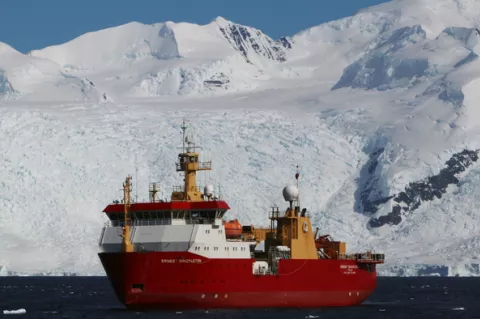
British Antarctic Survey research ship 'Ernest Shackleton' at Antarctica
Ecology & Science

Research by the University of Cambridge and the British Antarctic Survey has shown that ships entering Antarctica waters can potentially introduce invasive, non-native species to the pristine, untouched environment. 

Researchers pick up nine new calls made by Weddell seals

Using a special hydrophone, researchers at an underwater observatory in McMurdo Sound, Antarctica discovered nine new types of ultrasonic vocalisations made by Weddell seals.

Ecology & Science

Most of these sounds were measured at more than 21 kHz, which is beyond the range of human hearing of 20 to 20,000 hertz. A particular high-pitched whistle came in at 49.8 kHz. When the seals harmonised multiple tones, the resultant sound may exceed 200 kHz, which is beyond what even cats and dogs can hear).

The discovery was the subject of a paper published online in the journal The Journal of the Acoustical Society of America.

Blue whale numbers rebound off South Georgia

Increase in sightings raise recovery hopes.

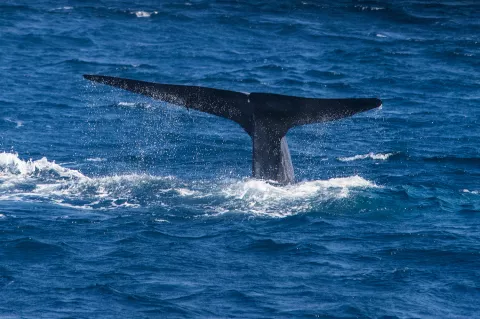
Blue whale off Sri Lanka
Ecology & Science

When whaling all but exterminated the Antarctic blue whale 50 years ago, the waters around South Georgia fell silent. Between 1998 and 2018, dedicated whale surveys off the sub-Antarctic island yielded a sole blue whale sighting. But a whale expedition this year and analysis by an international research team resulted in 58 blue whale sightings and numerous acoustic detections, raising hopes that the critically endangered mammal is finally recovering five decades after whaling was banned.

King crabs threaten Antarctic ecosystem

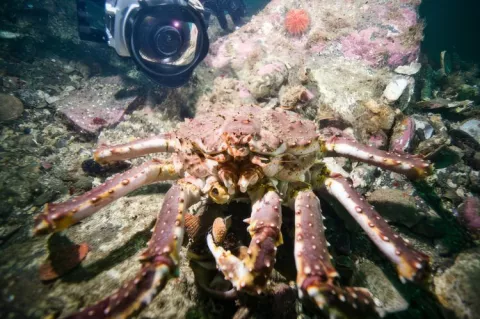
Due to warming ocean king crabs may soon become high-level predators in Antarctic marine ecosystems where they haven't played a role in tens of millions of years.

Ecology & Science

Rising temperature of the ocean west of the Antarctic Peninsula - one of the most rapidly warming places on the planet - should make it possible for king crab populations to move to the shallow continental shelf from their current deep-sea habitat within the next several decades, researchers from Florida Institute of Technology find

Pagination

  • Current page 1
  • Page 2
  • Next page ››
  • Last page Last »
Subscribe to Antarctica

Latest updates

Closed-circuit rebreathers, DPVs and technical diving systems were used by the Finnish recovery team to search the cave.
Maldives Recovery: Exclusive Interview With DAN Europe’s Laura Marroni and Sami Paakkarinen
8 Jul, 2026 - 17:29
Juvenile sea turtle photo by Tay Liang Wei
Lens Beyond Ocean Photo Competition 2026 Winners
8 Jul, 2026 - 16:52
Advanced nitrox diving
Crucible, Part I: A Deep Dive Into the Early Days of Technical Diving
8 Jul, 2026 - 16:12
Java Sidemount
Java Sidemount
8 Jul, 2026 - 13:55
More

Upcoming Events & Expos

9 Sep, 2026 ➢ 12 Sep, 2026

ABOFA – Aqaba Blue Ocean: Future in Action

Aqaba, Jordan

23 Oct, 2026 ➢ 26 Oct, 2026

Diving Talks

Lisbon, Portugal

3 Nov, 2026 ➢ 6 Nov, 2026

DEMA 2026

New Orleans, Lousiana

5 Dec, 2026 ➢ 6 Dec, 2026

Dive-Expo

Antwerp Expo, Belgium

Stay Social

Don’t forget that you can connect with us through all major social media, by simply clicking on the corresponding logo below.

Reviews

Books & Media

Marine Life of the North Sea and English Channel

Lawson Wood’s Marine Life of the North Sea and English Channel is an extensive guide dedicated to the exploration and understanding of the diverse marine ecosystems found between the British Isles and the coasts of northern France, Belgium, the Netherlands, Denmark, Norway and southern Sweden.

Cover  Marine LIfe of the North Sea and English Channel
Works by Our Contributors
Review
Books
Lawson Wood
Books & Media

Yes, Fish Feel Pain

A thought-provoking examination of fish sentience, behaviour and the growing scientific debate surrounding pain perception in aquatic animals.

Yes, Fish Feel Pain
Works by Our Contributors
Review
Books
Ila France Porcher
Books & Media

Secret Seas

Professional underwater photographer, Paul Flandinette and marine scientist and underwater photographer Michel Claereboudt take the reader on a breathtaking journey of discovery into Oman's underwater world.

Book cover
Review
Books
Books & Media

Scuba Diving Operational Risk Management

An SAS approach to principles, techniques and application in recreational and technical diving.

Book cover
Review
Books
Advertisement
Advertisement
Home
International Dive Magazine

About X-Ray Mag

AquaScope Media logo

Compiled by an international network of top dive editors and world-class underwater photographers, X-RAY MAG is the planet's only truly global premier dive lifestyle magazine. Subscription and downloads are free. Published since 2003.

Image
DEMA Member

Published by:

AquaScope Media ApS - Copenhagen - © 2026

A closer look below the surface.

Advertising

  • General info / Distribution
  • Rate cards
    • Media kit - $ (USD)
    • Media kit - € (EUR)
    • Media kit - £ (GBP)
  • Ad Sizes and Formats
    • Magazine Ad Copy sizes
    • Banner ad sizes
  • General trading terms

Privacy & GDPR

  • Privacy and Cookie Policy

Subscriptions

  • US Newsletter
  • Canadian Newsletter
  • European Newsletter
  • UK Newsletter
  • Asia-Pacific Newslettre
  • Other / Global
  • 😪 Unsubscribe

Brand Assets / Logos

  • Banner ads
  • Logos
  • SoMe Collaterals

Contact

  • Contact us
  • About us

Brugerkontomenu

  • Log in
Clear keys input element