Nudibranchs

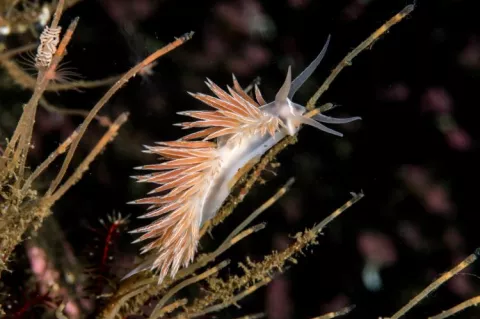
Flabellina affinis
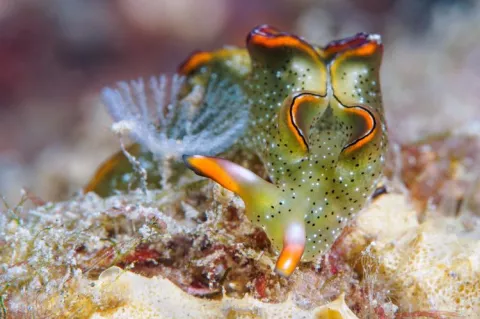
The study examined the predator–prey interactions between two nudibranch species, Caloria militaris and Flabellina affinis (shown), and various cnidarians, focusing on scyphozoan polyps from common eastern Mediterranean medusae.

How Nudibranchs Reuse Their Prey’s Stinging Cells

Some of the ocean’s most striking sea slugs—aeolid nudibranchs—possess an extraordinary ability: they can feed on stinging cnidarians without being harmed, and then capture and reuse their prey’s stinging cells, known as nematocysts, for their own defence. 

New scientific findings have now shed light on how they do it, offering a clearer picture of this remarkable biological strategy.

Compound in nudibranchs toxic to cancer cell lines

Natural products play an invaluable role as a starting point in the drug discovery process, and plants and animals use many interesting biologically active natural products as chemical defence mechanisms against predators. Among marine organisms, many nudibranch gastropods are known to obtain toxins from what they are eating, such as sponges.

These toxins are used as chemical defences and bright colours to warn potential predators away,

Japan's Kinki: Macro Mecca of Honshu

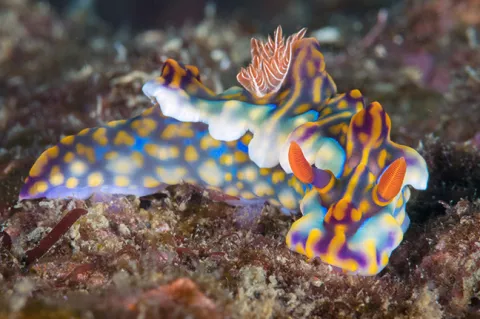
Magnificent Miamira (Miamira magnifica), Kinki, Japan. Photo by Andy Murch.

Kinki is a ruggedly beautiful peninsula in the southwest of Honshu, Japan. The area is best known for the Shinto shrines of Kumano, which sit atop forested mountains in the center of the region. Each year, thousands of tourists and devotees undertake a pilgrimage through the mountains to reach the tranquil sanctuary, which is said to be a place of physical healing.

The nudibranch Fjordia chriskaugei, Gulen Dive Resort, Norway

Nudibranchs named after Gulen Dive Resort and friends

Over the years, new species have been found and existing species have been moved to other genera while other species are new. Thus, our colleague Christian Skauge writes that the Flabellina family has now gone "extinct" in Norway because the species therein have now been reclassified and put into other genera.