  • X-Ray International 🇬🇧
  • Sportsdykkeren.dk 🇩🇰
  • XRay-Mag.SE 🇸🇪

Secondary menu - Advertising and subscriptions

  • Got stories? - Guidelines
  • Advertising
  • Subscribe to X-Ray Mag
Home
  • Magazine
  • News
      1. Latest news
      2. Press releases
      3. Breaking News
  • Travel
      1. Destinations
        1. Australia & New Zealand
        2. Continental Asia
          • Japan
          • China
          • South Korea
        3. Southeast Asia
          • Indonesia
            • Bali
            • Komodo
            • Lembeh
            • Maluku
            • Raja Ampat
            • Sulawesi
          • Malaysia
          • Papua New Guinea
          • Philippines
          • Thailand
          • Timor-Leste
        4. South Pacific & Oceania
          • Fiji
          • French Polynesia
          • Micronesia
            • Chuuk (Truk)
            • Marshall Islands
            • Yap
          • Palau
          • Samoa
          • Solomon Islands
          • Tonga
          • Vanuatu
        5. Indian Ocean
          • Madagascar
          • Maldives
          • Seychelles
        6. Red Sea
        7. Africa
          • Egypt
          • Malawi
          • Mozambique
          • Namibia
          • South Africa
          • Sudan
          • Tanzania
        8. Mediterranean & Adriatic
          • Croatia
          • Cyprus
          • France
          • Greece
          • Italy
          • Malta & Gozo
          • Portugal
          • Spain
          • Turkey
        9. Europe
          • Northern Europe
            • Denmark
            • England
            • Finland
            • Iceland
            • Ireland
            • Norway
            • Scotland
            • Sweden
          • Eastern Europe
            • Albania
            • Bosnia-Hercegovina
            • Croatia
            • Czech Republic
            • Hungary
            • Poland
            • Russia
              • Northwest Russia
              • Russian Far East
              • Siberia
          • Western Europe
            • Austria
            • France
            • Germany
            • Switzerland
          • Southern Europe
            • Cyprus
            • Greece
            • Italy
            • Malta & Gozo
            • Portugal
            • Spain
        10. Atlantic
          • Azores
          • Canary Islands
          • Falkland Islands
          • St Helena
        11. North America
          • Canada
          • Great Lakes
          • United States
            • East Coast
            • West coast
            • Alaska
            • Hawaii
            • US Virgin Islands
            • Guam
          • Mexico
        12. Caribbean & Central America
          • Bahamas
          • Belize
          • Cayman Islands
          • Bonaire
          • Cuba
          • Dominican Republic
          • Mexico
          • Columbia
          • Grenada
          • Costa Rica
          • Saba
          • Honduras
          • Turks & Caicos
          • US Virgin Islands
          • Nicaragua
        13. South America
          • Argentina
          • Brazil
          • Ecuador
        14. Polar Regions
          • Artic
          • Antarctica
      2. Promotions
      3. My Favorite Dive
  • Ecology
      1. Ocean Mysteries series by Ila France Porcher
      2. Sharks, Rays and Nudibranch stories by Andy Murch
      3. Sentience
      4. Conservation
      5. Coral Reefs
      6. Dolphins
      7. Fish
      8. Jellyfish
      9. Mantas & Stingrays
      10. Nudibranchs
      11. Octopus & Squid
      12. Sea Turtles
      13. Seals & Sea Lions
      14. Sharks
      15. Whales
  • Wrecks
      1. Vic Verlinden
      2. Ancient Wrecks
      3. Artificial Reefs
      4. Marine Archaeology
      5. Older Warships
      6. Steamships & Cargo
      7. Tall & Wooden Ships
      8. WWI Wrecks
      9. WWII Wrecks
  • Training & Tech
      1. Rebreathers
      2. Sidemount
      3. Deep Wrecks
      4. Cave Diving & Mines
      5. Ice Diving
      6. Diver Health & Safety
        1. Divers Alert Network - DAN
        2. Safety Culture
      7. Adaptive Diving
  • More
      1. Equipment
        1. BCDs, Wings & Sidemounts
        2. Dive Computers
        3. Dive Watches
        4. Drysuits & Undergarments
        5. Hoods, Gloves & Boots
        6. Lamps & Torches
        7. Masks, Fins & Snorkels
        8. Regulators
        9. Wetsuits & Rashguards
      2. Photo & Video
        1. Equipment
          • Cameras & Optics
          • Editing & Post-processing
          • Housings
          • Lighting
          • Useful Tools
        2. Tutorials
          • Techniques & Tips
            • Mike Bartick
            • Rico Besserdich
          • Composition
          • Editing & Post-processing
        3. News & Announcements
        4. Contributors' Picks
      3. Books & Media
        1. Works by our contributors
      4. Profiles & Interviews
        1. In Memoriam
      5. Lifestyle
        1. Portfolios & Ocean Arts
        2. Apres Dive & Apparel
        3. Editorials
      6. Contributors
        1. Pundits
          • Mike Ange
          • Gareth Lock
          • Michael Menduno
          • Mark Powell
          • Simon Pridmore
        2. Regular writers
          • Scott Bennett
          • Andrey Bizyukin
          • Larry Cohen & Olga Torrey
          • Pierre Constant
          • Brent Durand
          • Jennifer Idol
          • Scott Johnson
          • Steve Jones
          • Kate Jonker
          • Kelly LaClaire & Kate Holt
          • Matthew Meier
          • Brandi Mueller
          • Svetlana Murashkina
          • Barb Roy
          • Don Silcock
          • Claudia Weber-Gebert
          • Lawson Wood
        3. Columnists
          • Scott Bennett
          • Rico Besserdich
          • Rosemary 'Roz' E. Lunn
          • Ila France Porcher
  • ⚲ Search
X-RAY MAGAZINE FEATURE

Blue Sharks in the Azores

Freediving with blue sharks is a dream come true for many divers. The irridescent blues of this slender and graceful creature make it seem to appear and vanish from another dimension as it moves through the shifting light of the ocean. It has long pectoral fins, which complement its narrow form, a pointed nose, and large eyes. Like other sharks, it is curious about divers, and will come close for a look.

Words:
Kurt Amsler
Images:
Download the full article as pdf ⬇︎
Ecology & Science

The Azore Islands, located off Portugal in the North Atlantic Ocean, are convenient stop-overs for migrating oceanic sharks, and blue sharks congregate there in the summer months. Divers can rendezvous with them at the Condor Banks, located 35km off the island of Faial. The bank is about 180m deep, and has become a popular shark dive spot, having been the only place in the Azore Islands where fishing is prohibited.

X-RAY MAGAZINE FEATURE

Côte d'Azur

Coming full circle. It all started in the Med. It was here in the 1930’s and 40’s that the likes of Hans Hass, Jacques-Yves Cousteau, Frederic Dumas and Phillip Tailliez pioneered scuba diving as we came to know it. Erstwhile the obvious choice for dive travelers once the Red Sea and even more exotic destinations became accessible to a wider audience, it fell somewhat out of favor. But now, it’s back on the map, the fish are back and so are the divers. Kurt Amsler gives us the lowdown on diving in what is now his backyard.

Words:
Kurt Amsler
Images:
Download the full article as pdf ⬇︎
Travel & Trips

Wind the clock back to 1937, and we will find a young man from Austria by the name of Hans Hass spending his holiday after graduating from high school in the little town of Juan-les-Pins on the French Riviera. It was here he observed an Englishman hunting for fish underwater which seeded the inspiration that would later make him one of the greatest diving pioneers.

X-RAY MAGAZINE FEATURE

Apnea Pix

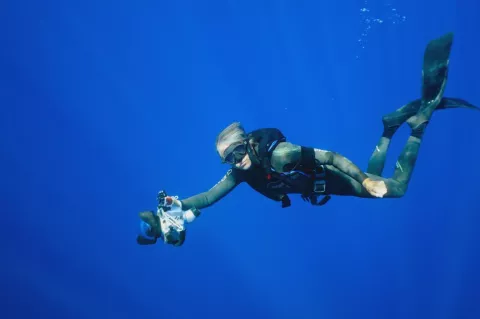
Taking pictures while freediving can be a real physical challenge, but in some cases, it may be the only option to get the subject in front of your lens.

Freediving in order to take underwater photographs is not the norm, but there are many freedivers who do just that—for example, the freediving icon Fred Buyle.
Words:
Kurt Amsler
Images:
Kurt Amsler
Download the full article as pdf ⬇︎
Photo & Video

It is also a good technique to use for practical reasons; Without noisy bubbles, it becomes possible to get closer to shy creatures. But the main advantage is that it’s easier to keep up with fast moving animals, such as marine mammals and sharks, when you do not have to propel bulky scuba apparatus through the water, too.

X-RAY MAGAZINE FEATURE

Malapascua Island's Thresher Shark Experience

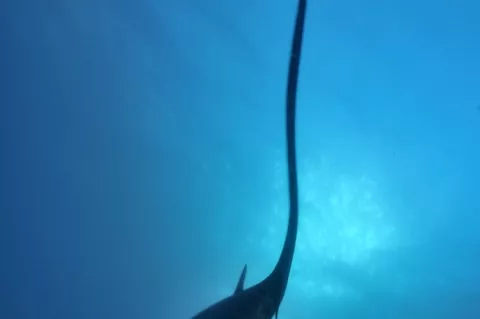
The fox shark, also called the common thresher shark, lives usually at depths of over 200 meters and it is sighted only rarely. This is the main reason, we don’t know very much about these animals, and there is very little good visual documentation showing thresher sharks up close on camera.

Words:
Kurt Amsler
Images:
Kurt Amsler
Download the full article as pdf ⬇︎
Travel & Trips

Attracted by several cleaning stations, the sharks come regularly before sunset for their early morning “toilette”. They are cleaned by the small cleaner wrasse that clean the sharks' skin, gills and even inside their mouths of parasites, bacteria and food debris.


Due to this behavior, it also makes it necessary for observers to be there on time as well, because it is the only chance to see and approach this shark to photograph it.

X-RAY MAGAZINE FEATURE

Looking for Moby Dick

It’s an adventure. You swim like a champion, trying to be as streamlined as possible and glide effortlessly through the water. Your heart rate is already at its limits and your breathing borders on hyperventilation. Your focus is on the sperm whale and its blow, which you can see just as you slide into the water. You are hoping to get the animal in front of your camera, but it is a bit of gamble.

Words:
Kurt Amsler
Images:
Kurt Amsler
Fred Buyle and Andreas Gruber
Download the full article as pdf ⬇︎
Travel & Trips
Photo & Video

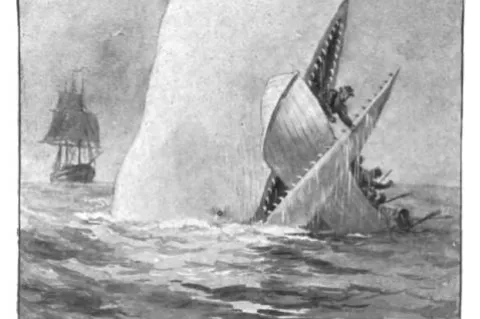
Yet the whales are elusive and their behavior is nowhere near what Herman Melville described in his famous novel, “Moby Dick”. Suddenly, a bulbous head sticks high out of the water. With flippers slapping the water, the sperm whale heads straight for us in order to ram us.


X-RAY MAGAZINE FEATURE

Finding the early humans

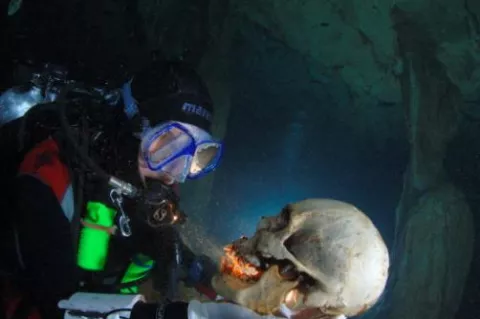
Discovery of prehistoric remains in the Yucatan.

Words:
Kurt Amsler
Images:
Kurt Amsler
Download the full article as pdf ⬇︎
Travel & Trips
Wrecks & Archaeology

For centuries these openings have provided inhabitants with access to fresh water, and the inaccessibility of the deep caves beneath the openings has long beckoned the adventurous, though physical challenges limited how far they could go.

In recent years, however, technological developments in underwater equipment have made it easier for divers to go farther into the networks of dark tunnels branching out from the submerged caves, and reports began to emerge about this dark underworld and its store of human and animal remains.

X-RAY MAGAZINE FEATURE

Fish Photography

Shooting fish with a camera isn’t easy! Unlike people they are perfectly adapted to the aquatic environment, hydro-dynamically shaped and in all their colourful splendour they are completely ignorant of any directions given by the photographer’s end. So to get that perfect shot we need a strategy – and the right equipment.

Words:
Images:
Download the full article as pdf ⬇︎
Photo & Video

Caution is a useful behavioural trait for many inhabitants on a tropical reef. It can be a matter of survival. Trying to capture a full format image of sardine with an ultra wide-angle lens is therefore better left to the experts. The creatures you meet underwater also have a comfort zone which you cannot penetrate—you need to keep a certain minimum distance. This is typically in the range of 0.7 to 1m. This makes the 28mm, 35mm and 50mm focal length lenses the best choice for pictures of fish that are 0.2 to 0.5m long fish.


X-RAY MAGAZINE FEATURE

Flash Photography

Getting an underwater camera is really only half the solution. Without a proper light source the possibilities will be very limited. Having one or more strobes are essential, but how to chose the right unit?

Words:
Kurt Amsler
Images:
Download the full article as pdf ⬇︎
Photo & Video

First of all, the strobes—or flash units—need to be both neutrally buoyant and in balance. It is no good if one end is positively buoyant and the other negative. A neutral and balanced strobe ensures that the photographer can work in any position or situation and not get exhausted from supporting or directing the strobes even after the typical ten minute hover to get that elusive shot.

Needless to say, the cameras, too, need to be perfectly buoyant and balanced, and they usually are. But it is to no avail if fitting the strobe to the camera doesn’t balance either.

10 Tips

  1. Most important, the strobe needs to be buoyant and perfectly balanced so you are able to work in any position. A buoyant strobe can be easily aimed at the subject because it can be moved in any direction without releasing the joints of the strobe arms.

     
  2. Remember that in wide-angle photography the position of the strobe is very important to avoid backscatter and to gain an uniform illumination of the subject. You have to take into account that the larger the picture angle, the further the strobes have to be positioned away from the lens!
X-RAY MAGAZINE FEATURE

Going Wide

The notion that wide-angle lenses can only be used for large subject matter is common, but erroneous.

Words:
Kurt Amsler
Images:
Download the full article as pdf ⬇︎
Photo & Video

Wide-angle lenses can be divided into three categories:


  1. standard wide-angle with focal lengths from 28 to 40 mm (film equivalent);

     
  2. super wide-angle with focal lengths from 17 to 24 mm; and

     
  3. a special type of super wide-angle: the fish-eye, which covers angles of 180 degrees and above.

Always go as close to the subject as possible to minimize the loss of colour and brilliance from absorption and diffusion in the water.

X-RAY MAGAZINE FEATURE

Night Photography

Night diving is the ultimate for many divers. Underwater photography without light is challenging, but with a few additional pieces of camera equipment and special techniques you can master this as well.

Words:
Kurt Amsler
Images:
Download the full article as pdf ⬇︎
Photo & Video

All living creatures, and especially crustaceans, which leave their dwellings in the dark, are best captured with close-up or macro photography. Sleeping fishes can often be approached by inching closer and closer until you are just a few centimetres away. This gives you the opportunity to get close-up images of their eyes and fins, which, during daylight, are virtually impossible. Many UW-photographers ask me if flashing strobes will disturb a sleeping fish. Good news! It is scientifically proven that sleeping fish are not disturbed by strobes.

Pagination

  • Current page 1
  • Page 2
  • Next page ››
  • Last page Last »
Subscribe to Kurt Amsler

Latest updates

New research suggests scuba diving may support mental well-being and emotional resilience in young adults.
Study by DAN Europe Explores Diving’s Potential for Young People’s Mental Well-being
12 May, 2026 - 13:22
Emperor Divers introduce temporary booking changes to give travellers added peace of mind
9 May, 2026 - 00:29
David Attenborough 100 years
Sir David Attenborough Turns 100
8 May, 2026 - 09:29
World Oceans Day Celebrated Around the Globe
8 May, 2026 - 08:38
More

Upcoming Events & Expos

5 Jun, 2026 ➢ 7 Jun, 2026

Malaysia International Dive Expo (MIDE) 2026

Malaysia International Trade and Exhibition Centre (MITEC), Kuala Lumpur

9 Sep, 2026 ➢ 12 Sep, 2026

ABOFA – Aqaba Blue Ocean: Future in Action

Aqaba, Jordan

23 Oct, 2026 ➢ 26 Oct, 2026

Diving Talks

Lisbon, Portugal

3 Nov, 2026 ➢ 6 Nov, 2026

DEMA 2026

New Orleans, Lousiana

5 Dec, 2026 ➢ 6 Dec, 2026

Dive-Expo

Antwerp Expo, Belgium

Stay Social

Don’t forget that you can connect with us through all major social media, by simply clicking on the corresponding logo below.

Reviews

Books & Media

Reefs of Time

In Reefs of Time, geoscientist and science educator Lisa S. Gardiner offers a compelling and accessible exploration of how fossil coral reefs can inform our understanding of the threats facing reefs today. 

Book cover:  Reefs of Time
Review
Books & Media

Scuba Diving Operational Risk Management

An SAS approach to principles, techniques and application in recreational and technical diving.

Book cover
Review
Books
Books & Media

Secret Seas

Professional underwater photographer, Paul Flandinette and marine scientist and underwater photographer Michel Claereboudt take the reader on a breathtaking journey of discovery into Oman's underwater world.

Book cover
Review
Books
Books & Media

Marine Life of the North Sea and English Channel

Lawson Wood’s Marine Life of the North Sea and English Channel is an extensive guide dedicated to the exploration and understanding of the diverse marine ecosystems found between the British Isles and the coasts of northern France, Belgium, the Netherlands, Denmark, Norway and southern Sweden.

Cover  Marine LIfe of the North Sea and English Channel
Works by Our Contributors
Review
Books
Lawson Wood
Advertisement
Advertisement
Home
International Dive Magazine

About X-Ray Mag

AquaScope Media logo

Compiled by an international network of top dive editors and world-class underwater photographers, X-RAY MAG is the planet's only truly global premier dive lifestyle magazine. Subscription and downloads are free. Published since 2003.

Image
DEMA Member

Published by:

AquaScope Media ApS - Copenhagen - © 2026

A closer look below the surface.

Advertising

  • General info / Distribution
  • Rate cards
    • Media kit - $ (USD)
    • Media kit - € (EUR)
    • Media kit - £ (GBP)
  • Ad Sizes and Formats
    • Magazine Ad Copy sizes
    • Banner ad sizes
  • General trading terms

Privacy & GDPR

  • Privacy and Cookie Policy

Subscriptions

  • US Newsletter
  • Canadian Newsletter
  • European Newsletter
  • UK Newsletter
  • Asia-Pacific Newslettre
  • Other / Global
  • 😪 Unsubscribe

Brand Assets / Logos

  • Banner ads
  • Logos
  • SoMe Collaterals

Contact

  • Contact us
  • About us

Brugerkontomenu

  • Log in
Clear keys input element