• Sportsdykkeren.dk 🇩🇰
  • XRay-Mag.SE 🇸🇪
  • Dykmässan (diveshow)

Secondary menu - Advertising and subscriptions

  • Got stories? - Guidelines
  • Advertising
  • Subscribe to X-Ray Mag
Home
  • Magazine
  • News
      1. Latest news
      2. Press releases
      3. Breaking News
  • Travel
      1. Destinations
        1. Australia & New Zealand
        2. Continental Asia
          • Japan
          • China
          • South Korea
        3. Southeast Asia
          • Indonesia
            • Bali
            • Komodo
            • Lembeh
            • Maluku
            • Raja Ampat
            • Sulawesi
          • Malaysia
          • Papua New Guinea
          • Philippines
          • Thailand
          • Timor-Leste
        4. South Pacific & Oceania
          • Fiji
          • French Polynesia
          • Micronesia
            • Chuuk (Truk)
            • Marshall Islands
            • Yap
          • Palau
          • Samoa
          • Solomon Islands
          • Tonga
          • Vanuatu
        5. Indian Ocean
          • Madagascar
          • Maldives
          • Seychelles
        6. Red Sea
        7. Africa
          • Egypt
          • Malawi
          • Mozambique
          • Namibia
          • South Africa
          • Sudan
          • Tanzania
        8. Mediterranean & Adriatic
          • Croatia
          • Cyprus
          • France
          • Greece
          • Italy
          • Malta & Gozo
          • Portugal
          • Spain
          • Turkey
        9. Europe
          • Northern Europe
            • Denmark
            • England
            • Finland
            • Iceland
            • Ireland
            • Norway
            • Scotland
            • Sweden
          • Eastern Europe
            • Albania
            • Bosnia-Hercegovina
            • Croatia
            • Czech Republic
            • Hungary
            • Poland
            • Russia
              • Northwest Russia
              • Russian Far East
              • Siberia
          • Western Europe
            • Austria
            • France
            • Germany
            • Switzerland
          • Southern Europe
            • Cyprus
            • Greece
            • Italy
            • Malta & Gozo
            • Portugal
            • Spain
        10. Atlantic
          • Azores
          • Canary Islands
          • Falkland Islands
          • St Helena
        11. North America
          • Canada
          • Great Lakes
          • United States
            • East Coast
            • West coast
            • Alaska
            • Hawaii
            • US Virgin Islands
            • Guam
          • Mexico
        12. Caribbean & Central America
          • Bahamas
          • Belize
          • Cayman Islands
          • Bonaire
          • Cuba
          • Dominican Republic
          • Mexico
          • Columbia
          • Grenada
          • Costa Rica
          • Saba
          • Honduras
          • Turks & Caicos
          • US Virgin Islands
          • Nicaragua
        13. South America
          • Argentina
          • Brazil
          • Ecuador
        14. Polar Regions
          • Artic
          • Antarctica
      2. Promotions
      3. My Favorite Dive
  • Ecology
      1. Ocean Mysteries series by Ila France Porcher
      2. Sharks, Rays and Nudibranch stories by Andy Murch
      3. Sentience
      4. Conservation
      5. Coral Reefs
      6. Dolphins
      7. Fish
      8. Jellyfish
      9. Mantas & Stingrays
      10. Nudibranchs
      11. Octopus & Squid
      12. Sea Turtles
      13. Seals & Sea Lions
      14. Sharks
      15. Whales
  • Wrecks
      1. Vic Verlinden
      2. Ancient Wrecks
      3. Artificial Reefs
      4. Marine Archaeology
      5. Older Warships
      6. Steamships & Cargo
      7. Tall & Wooden Ships
      8. WWI Wrecks
      9. WWII Wrecks
  • Training & Tech
      1. Rebreathers
      2. Sidemount
      3. Deep Wrecks
      4. Cave Diving & Mines
      5. Ice Diving
      6. Diver Health & Safety
        1. Divers Alert Network - DAN
        2. Safety Culture
      7. Adaptive Diving
  • More
      1. Equipment
        1. BCDs, Wings & Sidemounts
        2. Dive Computers
        3. Dive Watches
        4. Drysuits & Undergarments
        5. Hoods, Gloves & Boots
        6. Lamps & Torches
        7. Masks, Fins & Snorkels
        8. Regulators
        9. Wetsuits & Rashguards
      2. Photo & Video
        1. Equipment
          • Cameras & Optics
          • Editing & Post-processing
          • Housings
          • Lighting
          • Useful Tools
        2. Tutorials
          • Techniques & Tips
            • Mike Bartick
            • Rico Besserdich
          • Composition
          • Editing & Post-processing
        3. News & Announcements
        4. Contributors' Picks
      3. Books & Media
        1. Works by our contributors
      4. Profiles & Interviews
        1. In Memoriam
      5. Lifestyle
        1. Portfolios & Ocean Arts
        2. Apres Dive & Apparel
        3. Editorials
      6. Contributors
        1. Pundits
          • Mike Ange
          • Gareth Lock
          • Michael Menduno
          • Mark Powell
          • Simon Pridmore
        2. Regular writers
          • Scott Bennett
          • Andrey Bizyukin
          • Larry Cohen & Olga Torrey
          • Pierre Constant
          • Brent Durand
          • Jennifer Idol
          • Scott Johnson
          • Steve Jones
          • Kate Jonker
          • Kelly LaClaire & Kate Holt
          • Matthew Meier
          • Brandi Mueller
          • Svetlana Murashkina
          • Barb Roy
          • Don Silcock
          • Claudia Weber-Gebert
          • Lawson Wood
        3. Columnists
          • Scott Bennett
          • Rico Besserdich
          • Rosemary 'Roz' E. Lunn
          • Ila France Porcher
  • ⚲ Search
Featured
X-RAY MAGAZINE FEATURE

Safety Culture - diving in the zone

“Thank [beep] for that! How lucky were we? We better not do that again.

Don’t tell anyone though, we don’t want to look like amateurs...”

Words:
Gareth Lock
Images:
Gareth Lock
Download the full article as pdf ⬇︎
Tech and Training

The problem with not letting people know what happened is two-fold. Firstly, others can’t learn from your mistakes; and secondly, the ‘authorities’ don’t obtain the evidence to show that there is a problem with whatever it was that went wrong.


X-RAY MAGAZINE FEATURE

Diver Error Highlights the Lethality within the System

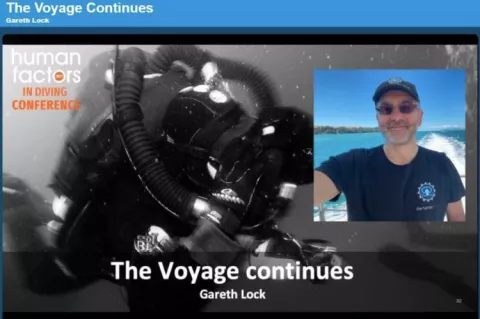
Diving is not without risk—there is always a chance of death. There is always a latent or potential lethality within the “system”—where system is defined as the equipment, people and the physical, social or cultural environment. We cannot make diving 100 percent safe despite what anyone tells you. We can make things safer, but we cannot make diving safe.
Words:
Gareth Lock
Images:
Gareth Lock
Download the full article as pdf ⬇︎
Tech and Training

Most of the time, it is the diver’s skills, knowledge and attitude that prevents those risks from being materialised and an injury or fatality from happening. However, when errors happen, the latent or hidden lethality within the system is exposed. Sometimes, there is some luck involved in preventing a fatality or serious injury. However, luck should never be considered part of the plan for anything other than those genuine expeditions that are really pushing the boundaries.

X-RAY MAGAZINE FEATURE

Creating a Virtual Event: From Acorn to Global Conference in Four Months

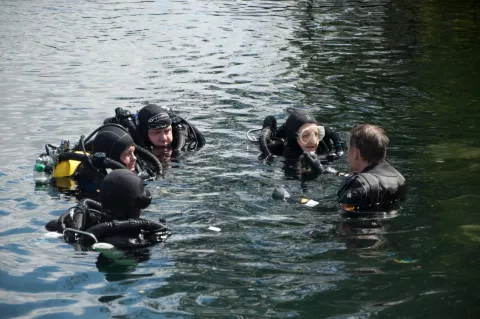
On 24-25 September 2021, the first-ever Human Factors in Diving Conference ran. There were 27 speakers from across the globe (New Zealand, Australia, Dubai, Europe, United States and Mexico) supported by the platform hosts LexGo Live. Just less than 25 hours of content was produced during the two eight-hour days and was uploaded in near-real-time, which will contribute to the learning about and application of human factors, non-technical skills, Just Culture and psychological safety in the sports, military, commercial and public safety diving sectors.
Words:
Gareth Lock
Images:
Gareth Lock
Screenshot from Human Factors in Diving Conference presented by Gareth Lock
➥ Download the full article as pdf ⬅︎
Other features

So, how did it start and what can you learn from the development of this event if you want to put something similar together?

The Idea

The genesis of the idea really started in July 2019 when I was running a two-day Human Factors in Diving face-to-face class in Edinburgh. There was a conversation between a few of the students who were from DAN Europe and the healthcare sector. Ideas were bounced around, but nothing really happened, partly because of the Covid-19 pandemic in 2020 and 2021, there were no dive shows!

X-RAY MAGAZINE FEATURE

Risk-Taking in Diving: Is it Worth it?

Diving is a sport which has an inherent risk of death or serious injury due to the aquatic environment in which the activity takes place. These risks are not just limited to drowning or decompression sickness, but many other issues like entanglement, injuries from the flora and fauna, or trauma. However, the positive side is that there are massive benefits that can be realised, including exposure to amazing underwater creatures from macro-level fauna to whale sharks and everything in between, wrecks full of interesting artifacts and life, cave systems with unique and marvelous geology, or just the serenity achieved by floating in the water, watching the world go by.

Words:
Gareth Lock
Images:
Download the full article as pdf ⬇︎
Tech and Training

It is this balance of risks that is often hard to understand when something goes wrong and a diver is killed, injured or has a really “scary” moment. We often forget that there are ever-present, low probability, high consequence risks whenever we go diving. This article will explain some of the challenges divers face when asked to take “personal responsibility” when they go diving and why. As with many things involving human factors and decision-making, the simplistic approach does not always help divers make the best choices.

X-RAY MAGAZINE FEATURE

Applying Non-Technical Skills

Two perfectly serviceable Boeing 747s crashed into each other on the runway killing 583 people in 1977. In another incident, the pilots shut down the wrong engine, and 47 people were killed when the aircraft crashed... But what has that got to do with diving?

Words:
Gareth Lock
Images:
Download the full article as pdf ⬇︎
Tech and Training

In 1977, two Boeing 747s were on the runway at Los Rodeos Airport, Tenerife. The plane from KLM was lined up, ready to take off, while the plane from Pan-Am was taxiing down the runway towards the first, to exit, turn around and await the former’s departure. However, there was thick fog, and neither crew could see each other.

X-RAY MAGAZINE FEATURE

Is Diving Really Safe?

Admittedly a rather contentious title, but it's supposed to be. Debates over whether diving, or even certain types of diving, are safe sometimes get emotive and heated, depending on the arguments being made. These include: Is closed circuit rebreather diving safe? How much safer is recreational rebreather diving than open circuit? Is cave diving safe? Is recreational diving to 18m on open circuit safe?

Words:
Gareth Lock
Images:
Download the full article as pdf ⬇︎
Tech and Training

The simple answer is—it depends! This article will present a series of arguments so the reader (and diver) can make that decision, as ultimately, it is the diver who is choosing to get in the water and expose themselves to the risks therein. The article will cover some essential definitions and then outline where responsibility could or should lie when it comes to undertaking a “safe” or “unsafe” activity. Note: the article will use figures from the United Kingdom, as these were the easiest for the author to source.

X-RAY MAGAZINE FEATURE

Decisions, Decisions, Decisions...

How you can improve your performance and safety by understanding why we make good (and bad) decisions.

Words:
Gareth Lock
Images:
Download the full article as pdf ⬇︎
Tech and Training

There is a significant body of evidence which shows that divers involved in diving incidents often make poor decisions—sounds obvious, doesn’t it? So if it is so obvious, why do we continue to make them? Simple decisions such as continuing a dive when they should have ended it, choosing the ‘wrong’ gas for narcosis/density/decompression reasons, wearing the wrong thermal protection for the conditions, diving with the ‘wrong’ buddies, the list goes on. This article will cover how we make decisions, and more importantly, why we make poor decisions and the pitfalls we encounter when doing so.

X-RAY MAGAZINE FEATURE

Reporting culture

“…The real reasons people don’t provide a higher level of detail are two fold: privacy and legal culpability” was the response recently when I posted a blog about the need to collect more detail when looking at diving incidents so that the community, the agencies and academia can understand WHY incidents happen.

Just knowing what happens is not enough to come up with strategies (personal or corporate) to prevent incidents from occurring in the future.

Words:
Gareth Lock
Images:
Download the full article as pdf ⬇︎
Tech and Training

We need to be able to raise the awareness and knowledge of those involved in the sport so that they can truly take responsibility for their own actions. Sticking a note in the manual saying that diving is dangerous or on the back of a CCR which says, “This unit can kill you if improperly used”, are not enough. That’s like saying “Drive safely to work” to your partner as they set off in the morning. People don’t get out of bed in the morning and decide, “This seems like a good day to make a monumental, obvious mistake whilst 70m below the surface!”


X-RAY MAGAZINE FEATURE

Just Culture

A diver had an oxygen toxicity seizure because an incorrect gas was filled in a cylinder by a dive centre. A baby died because the wrong dose of medication was injected. Who is to blame for the error and how do we try to make sure that these types of incidents aren’t repeated?

Words:
Gareth Lock
Images:
Gareth Lock
Download the full article as pdf ⬇︎
Tech and Training

Some of the readers may remember an article I wrote on this subject a couple of years ago, but this one will go into much more depth and give examples of the issues faced in both the scuba diving community and other environments, which have more established safety management system programmes and cultures.

X-RAY MAGAZINE FEATURE

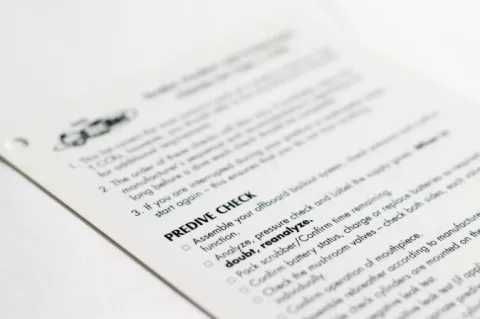
Checklists - a tick in the box

At the Rebreather Forum 3 conference held in Florida in May 2012, a number of presentations were made which advocated the use of checklists as a means to prevent diving incidents from occurring, or at least reducing the likelihood of occurrence.

Words:
Gareth Lock
Images:
Gareth Lock
Download the full article as pdf ⬇︎
Tech and Training

The reason why the presentations and consensus statement arrived at this position was because there is considerable evidence from aviation, medicine and other fields and disciplines that shows the proper use of checklists reduces the probability of incidents occurring.

Simple examples of how checklists have improved safety include making sure the limb for amputation has been actively and correctly identified, positive confirmation of the dose and identity of the drugs being administered or making sure the correct engine is being shutdown in the event of an aircraft engine fire.

X-RAY MAGAZINE FEATURE

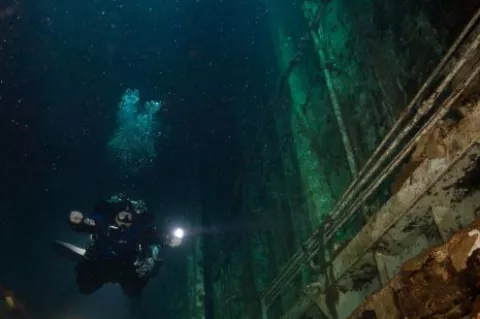
Safety Culture: What is it and do I have it?

In August 2012, I wrote an article which discussed just culture and what this meant in the context of recreational and technical scuba diving, and using this concept, how we can improve diving safety.
Words:
Images:
Download the full article as pdf ⬇︎
Tech and Training

But just culture is only one part of a safety culture, a term which is being promoted by a number of organisations and individuals as something that needs to be developed by individual divers to improve their safety. The funny thing is that a culture is something that is at the core of a community or group; it is ‘the way things are done around here’. (Williams et al, 1994).


Subscribe to Gareth Lock

Latest updates

Illustration of the diel vertical migration
The Great Hidden Migration: Rising from the Deep
12 Jun, 2026 - 19:53
Oceanic whitetip shark, Red Sea
Egypt Moves to Protect Red Sea Sharks
12 Jun, 2026 - 17:46
Unique Underwater Art Exhibition “Underwater Journey Continues” Opens in Rummu, Estonia
11 Jun, 2026 - 18:46
Dive Rite Nomad Mini Sidemount System
10 Jun, 2026 - 16:48
More

Upcoming Events & Expos

9 Sep, 2026 ➢ 12 Sep, 2026

ABOFA – Aqaba Blue Ocean: Future in Action

Aqaba, Jordan

23 Oct, 2026 ➢ 26 Oct, 2026

Diving Talks

Lisbon, Portugal

3 Nov, 2026 ➢ 6 Nov, 2026

DEMA 2026

New Orleans, Lousiana

5 Dec, 2026 ➢ 6 Dec, 2026

Dive-Expo

Antwerp Expo, Belgium

Stay Social

Don’t forget that you can connect with us through all major social media, by simply clicking on the corresponding logo below.

Reviews

Books & Media

Technically Speaking

Simon Pridmore's aim in writing this book was to examine and record where technical diving came from, how it developed, how it expanded across the world, who the important movers were and how the efforts of a few determined people changed our little field of human endeavour forever.

Technically Speaking
Works by Our Contributors
Review
Books
Simon Pridmore
Books & Media

Marine Life of the North Sea and English Channel

Lawson Wood’s Marine Life of the North Sea and English Channel is an extensive guide dedicated to the exploration and understanding of the diverse marine ecosystems found between the British Isles and the coasts of northern France, Belgium, the Netherlands, Denmark, Norway and southern Sweden.

Cover  Marine LIfe of the North Sea and English Channel
Works by Our Contributors
Review
Books
Lawson Wood
Books & Media

Yes, Fish Feel Pain

A thought-provoking examination of fish sentience, behaviour and the growing scientific debate surrounding pain perception in aquatic animals.

Yes, Fish Feel Pain
Works by Our Contributors
Review
Books
Ila France Porcher
Books & Media

Scuba Diving Operational Risk Management

An SAS approach to principles, techniques and application in recreational and technical diving.

Book cover
Review
Books
Advertisement
Advertisement
Home
International Dive Magazine

About X-Ray Mag

AquaScope Media logo

Compiled by an international network of top dive editors and world-class underwater photographers, X-RAY MAG is the planet's only truly global premier dive lifestyle magazine. Subscription and downloads are free. Published since 2003.

Image
DEMA Member

Published by:

AquaScope Media ApS - Copenhagen - © 2026

A closer look below the surface.

Advertising

  • General info / Distribution
  • Rate cards
    • Media kit - $ (USD)
    • Media kit - € (EUR)
    • Media kit - £ (GBP)
  • Ad Sizes and Formats
    • Magazine Ad Copy sizes
    • Banner ad sizes
  • General trading terms

Privacy & GDPR

  • Privacy and Cookie Policy

Subscriptions

  • US Newsletter
  • Canadian Newsletter
  • European Newsletter
  • UK Newsletter
  • Asia-Pacific Newslettre
  • Other / Global
  • 😪 Unsubscribe

Brand Assets / Logos

  • Banner ads
  • Logos
  • SoMe Collaterals

Contact

  • Contact us
  • About us

Brugerkontomenu

  • Log in
Clear keys input element